Chain Link Fence Gate: Sizes, Types & 2026 Guide
A standard residential chain link fence gate often falls in the $22 to $50 per foot range for materials, but the actual price moves once hardware quality and code-compliant pool details enter the job. The gate usually fails at the hinges, latch, frame, or coating breaks long before the mesh gives up.
Buyers often pick a gate the way they'd pick a fence panel with hinges. That shortcut is why callbacks happen. A chain link fence gate is an operating assembly, not just an opening, and the weak link is usually the hardware package, the support posts, or the way the gate was set for daily use in Florida weather.
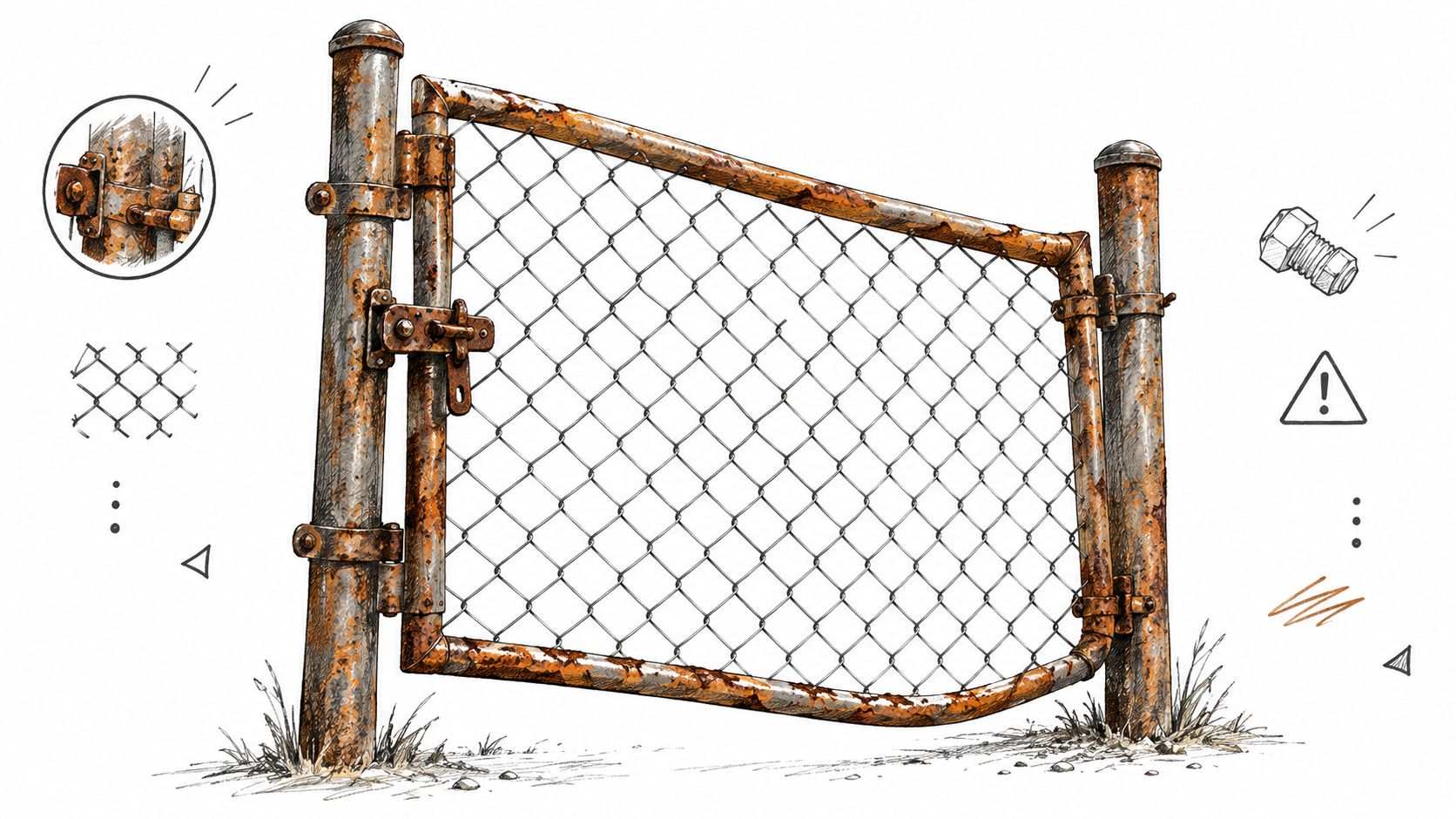
Table of Contents
- Why Most Chain-Link Gates Fail Before the Mesh Does
- Understanding Chain-Link Gate Specifications
- Choosing the Right Gate Size and Bracing
- Florida Pool Safety and ADA Compliance Requirements
- Hardware Selection for Coastal Environments
- Installation Best Practices and Commissioning Checklist
- Next Steps for Your Chain-Link Gate Project
Why Most Chain-Link Gates Fail Before the Mesh Does
The sales pitch usually stops at “galvanized”, which is too vague for Florida coastal work. Gates fail first at the moving parts, not the woven fabric. A marine field study found vinyl-clad galvanized chain link and accessories held up better than other systems after exposure, and federal guidance warns that standard galvanized steel can corrode badly in warm, humid, chloride-rich coastal locations in as little as five years. Chain-link gate history and coastal service notes
The failure shows up in stages. The gate starts dragging on the latch side, the closer loses its rhythm, and the hinge side settles out of square. The mesh still looks fine, so the latch gets blamed, but the underlying problem is usually a mix of trapped moisture, worn hinge barrels, and corroded attachment points around the frame.
Where the damage starts
The weak points are predictable:
- Hinges, especially on a heavy gate or after a post shifts in a storm.
- Latches, because alignment gets tighter as corrosion builds.
- Tension hardware, which takes repeated vibration from daily use.
- Gate frames, where cut ends and welds expose metal.
- Low spots that trap water, including areas hit by sprinklers or pool splash.
Practical rule: If a gate sticks only after rain, the problem is usually hardware, drainage, or post movement.
That is why a Florida homeowner should not treat vinyl-coated or galvanized as a complete answer. A coated mesh can still sit on plain hardware that rusts first. Good coating does not rescue a gate with weak posts or poor clearance, and once hinge drag starts, the latch usually follows.
Start with the hinge and latch package. See our guide to gate hinges and hardware for the parts that fail first and the clearances that keep them working. Then inspect the gate like a contractor, hinge line, frame corners, latch strike, and the lower areas where water sits. A gate that looks fine from the mesh side can still be near failure at the hardware and coating breaks.
Understanding Chain-Link Gate Specifications
A chain link fence gate should be selected by measurable specifications, not by guesswork or appearance. Mesh opening, wire gauge, frame material, and coating all affect how the gate performs, especially as the opening gets wider or the site gets harsher. The usual baseline is 2-inch mesh with 9-gauge galvanized steel wire, which gives a practical middle ground for everyday use. Chain-link fabric and gate specification manual
Reading wire gauge the right way
Smaller gauge numbers mean thicker wire. Common wire sizes in chain link work include 6-gauge at 0.192 inches (4.88 mm), 9-gauge at 0.148 inches (3.76 mm), 11-gauge at 0.120 inches (3.05 mm), and 12-gauge at 0.105 inches (2.67 mm). A 6-gauge component is much heavier-duty than a 12-gauge component, even though the numbering reads backward to many buyers. wire gauge dimension table
The standards matter because they give contractors a common language for comparison. USDA Natural Resources Conservation Service specifications call for chain-link fabric to conform to ASTM A392 and gates, gateposts, and accessories to ASTM F900. That keeps the discussion focused on mesh size, wire thickness, coatings, and accessories instead of vague words like “heavy duty.” ASTM A392/F900 conformance requirements
For a buyer, the key split is between fabric and gate assembly. Fabric tells you what the mesh is. The gate assembly tells you whether the frame, hinges, latch, and post system can carry that mesh without sagging.
In a project that includes chain link fence panels, the gate should be specified alongside the adjoining run, not treated as an afterthought. Panel height, fabric type, and coating need to line up with the gate leaf and its hardware.
What to compare before ordering
- Mesh opening, because security and visibility change together.
- Wire gauge, because thicker wire resists abuse better.
- Coating class, because coastal wear depends on more than the mesh itself.
- Gate-post compatibility, because the strongest fabric still fails on a weak frame.
A gate spec that only says “chain link” is incomplete. The finished opening needs the right fabric, the right frame, and the right accessories working as one system.
That is the difference between contractor-grade ordering and retail shopping. A homeowner may buy a gate leaf. A field installer checks whether that leaf fits the opening, matches the fence fabric, and pairs with the correct hardware package.
Choosing the Right Gate Size and Bracing
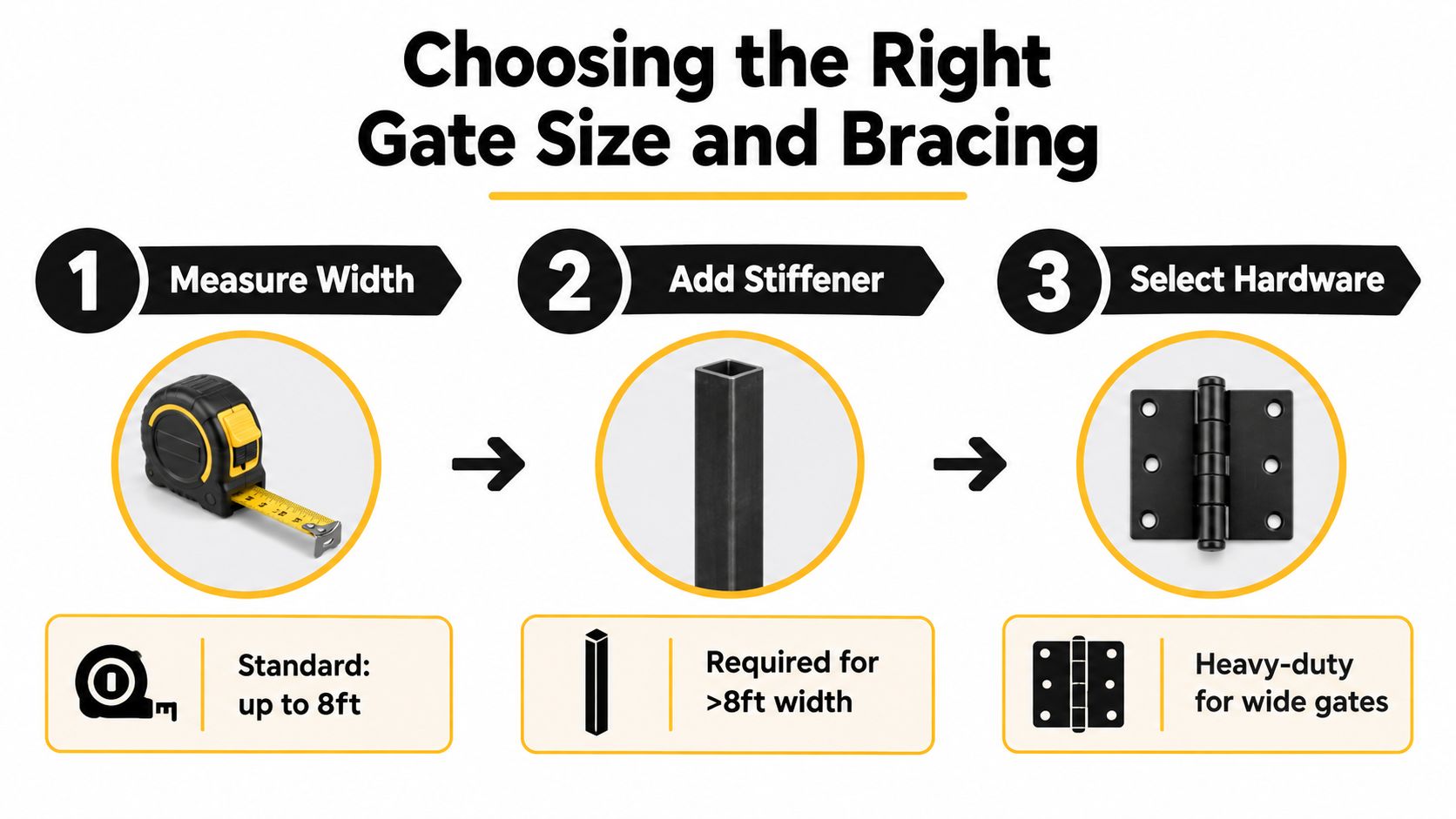
A gate fails at the frame and hardware long before the mesh tears. On a narrow walk gate, standard parts can hold up if the posts are set well. Once the opening gets wider, the load moves farther from the hinges, and the frame needs real bracing to stay aligned. One published engineering specification calls for an intermediate vertical stiffener on a gate leaf wider than 8 feet, and an intermediate horizontal stiffener above 10 feet. Engineering specification for wide chain-link gate leaves
What a wider opening actually changes
A wider chain link fence gate is not just a longer leaf. The added span gives the frame more room to twist, and that is when latch trouble starts, especially if the post line moves even slightly under use or wind. In the field, that means wide gates need diagonal adjustable truss rods, non-lift-off hinges, and latches that work cleanly from either side.
Hinge count changes with the opening too. Gates are specified to swing through 180 degrees, and hinge quantity increases once a leaf goes over 6 feet wide. The fabric also has to be tied to the frame at intervals of no more than 15 inches, with the leaf set plumb and true so the latch lands where it should. Engineering specification for wide chain-link gate leaves
Size, use, and support have to match
A 4-foot walk gate usually lives or dies on hinge alignment and post depth. A 10-foot double drive needs two leaves that meet cleanly at the center, plus a post layout that keeps each side from drifting out of line. A 16-foot equipment gate puts more stress on the posts, the hinge plates, and the truss rod, so I plan for heavier support before I ever hang the leaf.
- A 4-foot walk gate is usually the simplest case, but it still needs a true post line and hardware that closes without rubbing.
- A 10-foot double drive should be laid out so both leaves meet squarely, with enough post strength to handle repeated use without the latch side sagging.
- A 16-foot equipment gate needs the most attention to bracing, because vehicle traffic exposes weak posts and loose hardware fast.
- Any gate that will stay in service a long time needs a frame and support system sized for movement, not just for the opening on paper.
A gate that looks fine on installation day can start dragging once humidity, use, and a little settling take their toll. The first complaint is usually a latch that no longer meets cleanly, not torn fabric. On commercial jobs and security openings, the quote matters less than whether the posts, hinges, and bracing were sized as one system from the start.
Florida Pool Safety and ADA Compliance Requirements
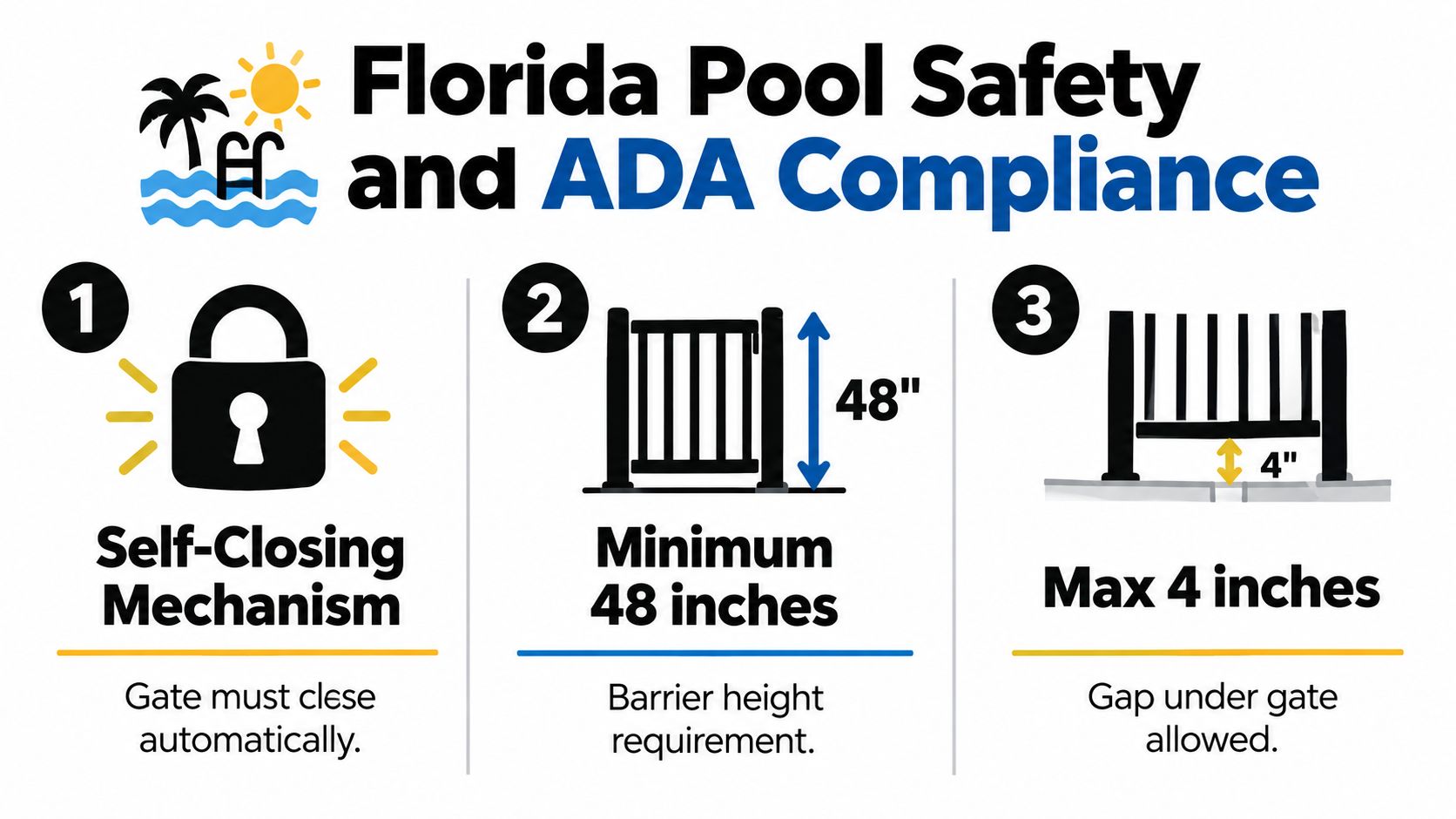
A chain link fence gate that serves a pool barrier or an accessible route has to satisfy two different sets of demands at once. It must keep children out, allow legitimate passage, and still fit the opening, hardware, and clearance rules tied to the site's use. For Florida pool barriers, chain-link mesh openings cannot exceed 2 1/4 inches unless slats fastened at the top or bottom reduce the openings to 1 3/4 inches or less. Pool access gates must be self-closing and fitted with a self-latching locking device on the pool side. The full geometry and height rules are covered in our Florida pool fence requirements guide, and the state guidance is summarized here: Florida pool-barrier requirements summary.
Pool gates create their own trade-offs
A gate that feels easy during maintenance can become a liability if the closer is undersized or the leaf is too heavy for the hinge set. Double gates add another weak point. A drop rod may hold the inactive leaf in place, but if it is not managed correctly, the barrier stops behaving like a barrier. The release also has to be positioned so a young child cannot reach over or through the opening.
ADA requirements add a separate layer. The U.S. Access Board requires at least 32 inches of clear opening for an end door or gate and 42 inches for a side door or gate. Operable parts must sit between 34 and 48 inches above the finished ground, work with one hand, and avoid tight grasping, pinching, or wrist twisting. They also cannot require more than 5 lbf of force. Access Board gate and door criteria
Clear space around the gate matters just as much as the gate leaf itself. A latch side crowded by a wall, post, or nearby barrier can fail the practical test even if the hardware is correct. Nominal width on paper does not guarantee usable passage once hinges, stops, and frame parts take away part of the opening.
What to verify on site
- Release height, measured from the finished ground at the actual latch location.
- Reach-over protection, so the opening cannot be manipulated from outside the barrier.
- Measured clear width, taken after hinges, stops, and hardware are installed.
- Barrier opening size, checked against the pool code requirement, not the catalog description.
A gate can look finished and still fail compliance if the release sits too low, the approach area exposes the latch, or the opening narrows after hardware is set. On pool jobs, I verify the geometry first, because a clean swing means little if the barrier itself does not meet the rule.
Hardware Selection for Coastal Environments
Florida heat, humidity, and salt air wear out the small parts first. On a chain link fence gate, the mesh can still look serviceable while hinge barrels, latch bodies, fasteners, and cut ends are already losing their protection. Hardware selection has to be treated as its own spec, because the moving parts fail before the fabric does.
What deserves the upgrade
A generic “rust-resistant” label is not enough in a coastal install. Corrosion starts where the coating gets broken, at cut edges, welds, hinges, and latch interfaces. It also shows up where sprinkler overspray, pool splash, or standing moisture lingers instead of draining off. For coated steel, field guidance and coating specs both point to the same practical rule, exposed metal needs a finish system that fits the site, not just the fence color. ASTM A123/A123M galvanizing standard
The finish callout should name the coating class on the frame and the gate hardware, not just the mesh. Zinc-plus-vinyl systems and Type II polymer coatings hold up better than plain “galvanized” claims once salt and constant moisture get involved. That matters on residential and commercial gates alike, because the hardware usually ages faster than the fabric.
Component-by-component checks
- Hinges: Use corrosion-resistant hinges that still allow adjustment after installation. Stainless or polymer-backed options can make sense where salt exposure is routine.
- Latch assembly: Pick a latch that closes cleanly without binding, and confirm the spring or catch parts are protected from direct spray.
- Frame finish: Inspect welds and cut ends closely. Zinc-rich paint or approved end caps should cover exposed steel where coating was damaged during fabrication or trimming.
- Fasteners: Match the fastener material to the environment. A mixed-metal shortcut often turns into a rust streak first.
- Drainage detail: Keep water from pooling around the gate base, hinge cups, and latch area.
Coastal jobs also expose a pool-safety conflict that generic hardware specs miss. A latch can be corrosion-resistant and still be the wrong shape, the wrong height, or too stiff for regular use. Hardware has to satisfy both durability and access control.
For homeowners comparing bids, the writeup should name the gate hardware package in plain language. AlliedFenceAndGate.com™ helps Florida homeowners compare that scope against the rest of the fence line. The actual install still depends on the hardware choice and the site conditions.
Installation Best Practices and Commissioning Checklist
A chain link fence gate should be treated like a machine that has to pass daily use, wind, and child access without drift. Public-sector specs back that up, because Denver requires the complete chain-link system, including framework, fabric, accessories, manual gates, and hardware, to be installed in accordance with Chain Link Fence Manufacturers Institute recommendations and ASTM F 567. Denver chain-link fence specification
What gets checked before handoff
The first job is visual, but the true check is mechanical. The gate should swing freely, clear the ground, and close without a shove. If it needs a hip check or shoulder push, the latch won't survive normal homeowner use for long.
A practical commissioning pass should cover these points:
- Confirm plumb and alignment. The gate leaf should sit square in the opening, not slightly twisted.
- Test the swing arc. The gate should move through its intended range without rubbing on fabric or posts.
- Watch the latch engage. It should catch cleanly, without forcing or bouncing back.
- Verify clearance. Side elements, landscaping, or barrier returns shouldn't block the gate's path.
- Check post movement. Push and pull the gate to see whether the posts shift under load.
Use the right field checks
- Self-closing behavior: The gate should close under its own mechanism, not from a hard push.
- Latch reliability: The catch should work from a normal walking pace, not a slow careful motion.
- Hardware security: Fasteners, hinge bolts, and accessories should stay tight after cycling.
- Storm aftermath: After wind or saturation, inspect post movement, hinge alignment, and latch height.
A gate that passes the eye test can still fail the use test. Open it, close it, and do it again before the crew leaves.
This is also where drainage and finish details matter. A gate that sits in standing water or gets buried by landscaping changes can drift out of service quickly. The hardware doesn't need to be exotic, but it does need to be adjusted, protected, and tested in the actual environment.
Next Steps for Your Chain-Link Gate Project
The right chain link fence gate starts with the use case. A boundary gate, a pool gate, and an accessible-route gate all have different demands, even if they use similar-looking mesh and posts. The smart move is to specify the fabric gauge, mesh opening, hardware package, hinge style, latch type, and corrosion protection together instead of treating the gate as an afterthought.
A practical procurement list should also name the compliance layer. If the opening serves a pool barrier, the self-closing and self-latching behavior matters as much as the mesh size. If it serves an accessible route, the clear width and hardware height matter just as much as the frame finish. If the gate sits in coastal air, the coatings on the visible mesh won't save underspecified hardware.
For homeowners and property managers in Martin and Palm Beach Counties, the cleanest path is to start with a measured layout, then match the gate to the site's real use and exposure. That approach prevents the most common miss, buying a fence opening instead of a functioning gate assembly.
If you're planning a new gate or replacing one that drags, rusts, or won't close right, AlliedFenceAndGate.com™ can help with layout, permitting, and code-aware fence planning for Florida properties. Visit AlliedFenceAndGate.com™ to review chain link gate options, compare project details, and move from estimate to installation with a crew that works these jobs every week.
Related Fencing Services
Need a fence or gate on the Treasure Coast?
Licensed, insured, and bonded. Free estimates across Martin, St. Lucie, Indian River & Palm Beach counties.
Call (772) 530-3127