Aluminum Fence Gate Latch: Types, Pool Codes and Fixes

The gate looks shut. A homeowner gives it a light pull on the way back from the pool deck, hears a click, and walks inside. Ten minutes later, wind and a slightly sagging hinge leave that same aluminum gate resting against the keeper instead of latched into it. That's the everyday gap between a good looking fence and a working barrier. The latch didn't break. The geometry around it stopped helping it work. This guide sorts latch types, Florida measurements, coastal corrosion, installation order, and the re latch test that catches trouble before an inspector does.
Table of Contents
- Latch Types That Fit an Aluminum Gate
- Florida Pool-Gate Latch Requirements and Dimensions
- Corrosion and Hardware Pairing on the Coast
- How to Install a Self-Latching Aluminum Gate Latch
- Testing and Maintaining a Latch That Re-Latches
- Mistakes That Make a Pool-Rated Latch Fail Inspection
- Choose the Latch That Passes Your Gate Inspection
Latch Types That Fit an Aluminum Gate
The sorting question is simple. Does this gate guard a pool, or does it just mark a boundary? An aluminum fence gate latch comes in a handful of forms, and only the pool design is built to re engage on its own, every time, with the release shielded from small hands.
| Latch type | Best use | Self-latching | Reference price |
|---|---|---|---|
| Gravity drop latch | Light residential gates without a pool | Only with a properly set closer and aligned gate | $6.99 (Ironcraft gravity latch, 2025) |
| Spring thumb latch | Garden and side gates | Only when the spring returns the bolt fully | Price set by handle material and spring |
| Magnetic latch | Lightweight gates and quiet closing | Partly, needs a firm closing gate | $69.99 (Ironcraft 10-inch magnetic protector, 2025) |
| Self-latching pool latch with pool-side release | Pool enclosures and barrier gates | Yes, positive mechanical engagement | Price set by model and lock cylinder |
| Lockable gate latch | Commercial and shared-access gates | Buyer must verify automatic engagement on the model | Price set by cylinder and access control |
What the price gap actually buys
In 2025, Tractor Supply's aluminum fence gate latch listings priced an Ironcraft aluminum fence gravity latch at $6.99 and an Ironcraft 10-inch magnetic protector fence gate latch at $69.99. That tenfold spread buys materials, size, and closing feel. It doesn't certify code compliance. A cheap gravity latch on a true, self closing side gate can work for years. An expensive magnetic unit on a dragging pool gate still fails the job that matters.
Think of an ordinary catch as a bolt a person must remember to slide. A self-latching pool latch works like a spring loaded door. It catches because the gate closed, not because somebody remembered.
Sorting rule: Pool gates need code rated, self-latching hardware first and style second. Garden and side gates can use gravity or spring latches provided the gate closes fully.
Friction and magnetism alone deserve caution on any barrier gate. Positive tongue into keeper engagement is the standard to demand, and the closer has to deliver the gate to that keeper with enough energy to finish the job.
Florida Pool-Gate Latch Requirements and Dimensions
Florida treats the latch as life safety hardware. An inspector with a tape can check each measurement below in under a minute, and they work as a system: get the height right and the release wrong, and the gate still fails. Readers who want the wider barrier picture can review the Florida pool fence requirements guide before ordering hardware.
| Requirement | Value | Risk it blocks | When to check |
|---|---|---|---|
| Gate swing | Opens outward, away from the pool | Pressure from inside would push the gate open | At installation |
| Gate height | At least 48 inches | Climbing over the gate | After final grade |
| Release height, pool side | At least 54 inches above gate bottom | Young child reaching over the top | After hinge adjustment |
| Lower release (under 54 inches) | Interior side, at least 3 inches below gate top | Child reaching over or around the gate | At installation |
| Openings within 18 inches of release | No more than 1/2 inch | Reaching through pickets or rails to operate the latch | After post setting |
| Operable part on accessible routes | Typical band of about 34 to 48 inches above finished floor or ground | Reach and grip difficulty for users with disabilities | Commercial and public gates only |
Why each measurement exists
The Florida Building Code pool barrier provisions require an access gate at least 48 inches (1,219 mm) high that opens outward and uses a self-latching device. Release height is set at 54 inches (1,372 mm) above the bottom of the gate. The code also permits a lower release, at least 3 inches (76 mm) below the gate top, and that alternative applies to the side of the gate facing away from the pool, meaning the interior side. It does not let anyone drop the pool-side release down to reachable height. Openings stay at 1/2 inch (12.7 mm) or less within 18 inches (457 mm) of the release mechanism.
Outward swing means a child leaning on the gate from inside pushes it toward closed. Height and release placement keep small hands from reaching over the top. The half-inch limit inside that 18-inch band stops fingers from slipping through pickets or the post gap to work the release from outside.
The separate accessibility rule
Commercial and public gates on accessible routes follow a different height logic. The ADA Standards from the U.S. Access Board require the operable part to work without tight grasping, pinching, or twisting of the wrist. Height is usually settled in the field: most commercial gate hardware lands in roughly the 34-to-48-inch band above the finished surface, which covers both standing adults and wheelchair users. Treat that band as a working guideline rather than a cited number, and confirm the range the project's accessibility reviewer expects before drilling. A lever style release suits the grip requirement. A small twist knob mounted high doesn't.
Measure release height after final grade, slope work, and hinge adjustment, not from the bare aluminum frame on sawhorses. Posts settle, pavers add height, and both change the number an inspector reads.
Grade and hinge sag move that number more than hardware choice does. A gate measured in the shop can lose effective height once deck pavers go in, so the tape check belongs at the end of the install, not the beginning. Check the release with the gate at rest and again after the closer pulls it shut, because a sagging hinge tilts the latch and shifts where the tape lands.
Corrosion and Hardware Pairing on the Coast
"Rust resistant" is the weakest advice in coastal fencing. Aluminum doesn't rust like steel, yet a latch assembly on the Treasure Coast can still pit, stick, and stop catching within a few seasons. The problem usually sits at the joints, not in the middle of a rail.
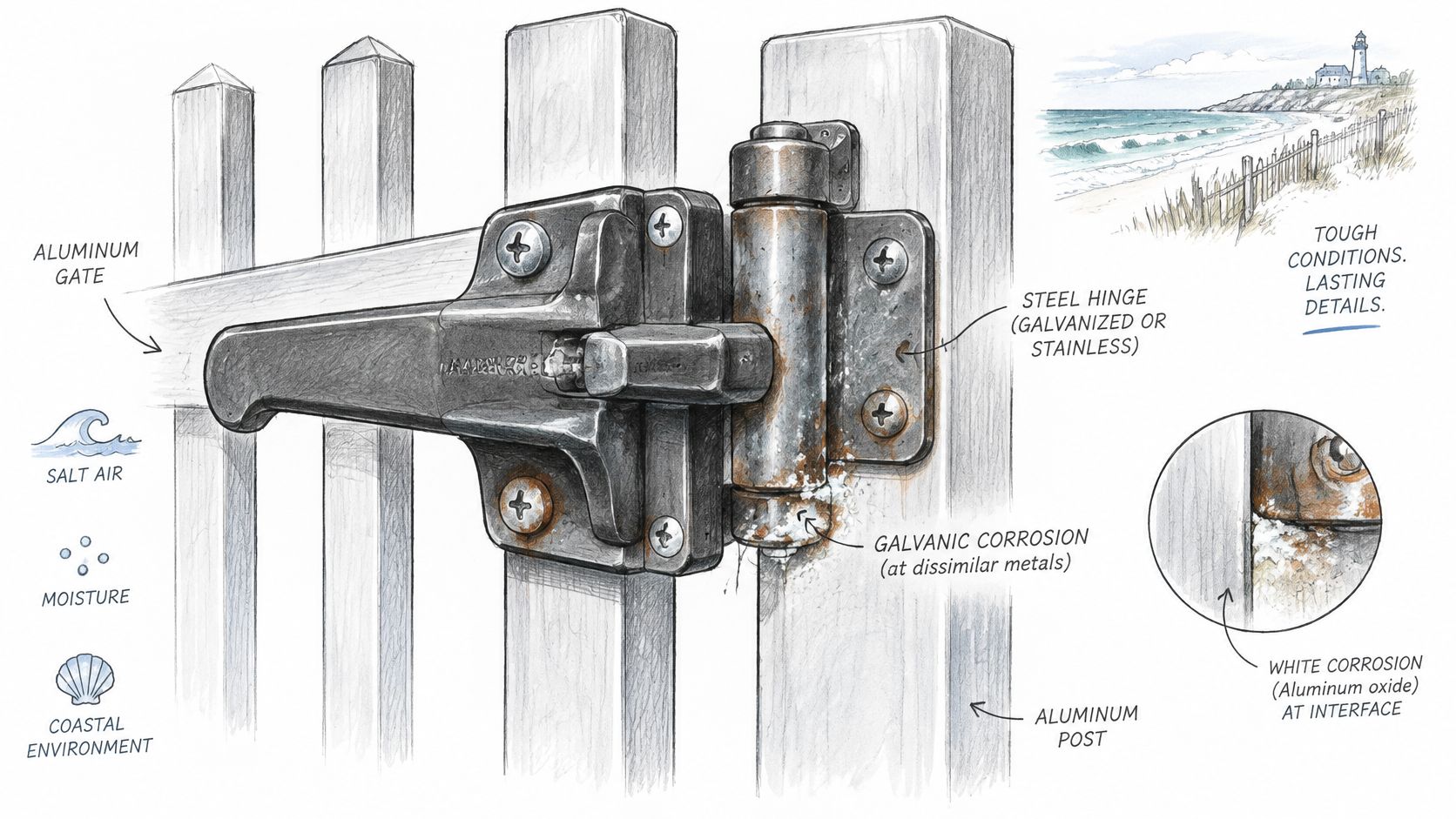
How galvanic corrosion starts
When stainless screws sit in aluminum and salt moisture bridges the two metals, an electrical path forms and the aluminum can pit around the screw heads. A 2025 study of bolted A4 stainless steel and EN AW-6082 aluminum assemblies under cyclic salt spray conditions shows that stainless hardware isn't automatically maintenance free in marine air. Pairing and isolation matter more than the label on the box.
Steel springs and keepers often fail first because they're small, exposed, and constantly moving. Salt deposits raise friction, latch travel gets rough, and a gate that once caught cleanly starts needing a nudge. Hardware pairing guidance in the gate hinges and hardware overview helps buyers match components before that cycle starts.
- Isolate fasteners: Fit nylon washers or sleeves between stainless screws and aluminum surfaces.
- Rinse routinely: Wash salt residue off the latch, hinges, and post caps every few weeks with fresh water.
- Match materials: Choose marine grade stainless or components compatible with the gate frame, keeper, and post.
- Inspect springs yearly: Replace tired springs before weak return turns into missed latching.
White oxidation on the frame is cosmetic. Dark staining around fasteners is a warning worth acting on. A latch that no longer self latches is neither. That's a safety failure needing immediate repair, even when the gate still looks sound from the street.
How to Install a Self-Latching Aluminum Gate Latch
Order matters here. Mounting the latch before confirming swing, gaps, and closer strength just locks mistakes into the post. The U.S. Consumer Product Safety Commission barrier guidelines recommend gates that open outward from the pool and both self close and self latch, and they place a release under 54 inches on the interior side at least 3 inches below the top. The same guidance limits openings within 18 inches of the release to one half inch.
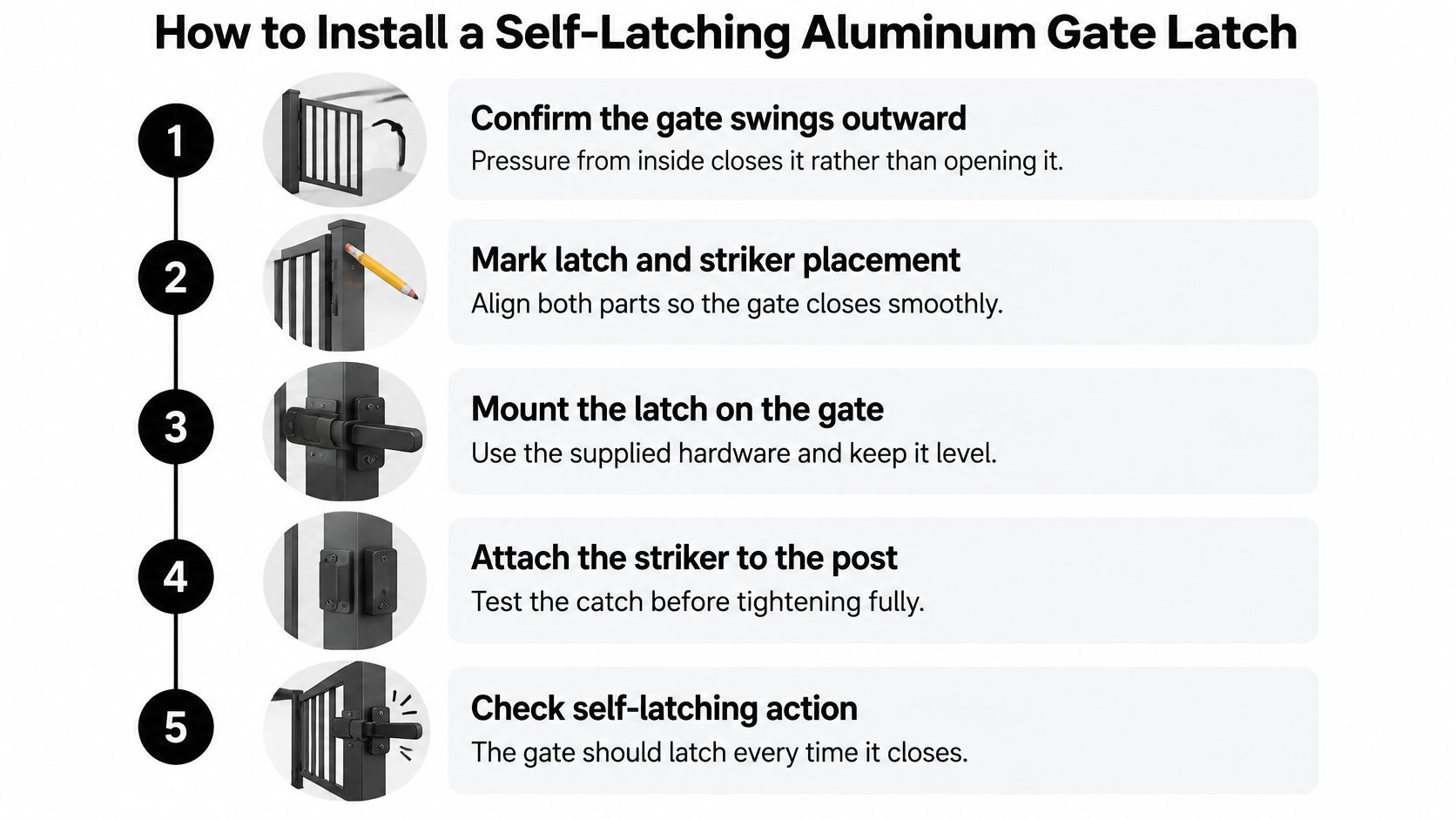
The six step sequence
- Confirm outward swing away from the pool, because pressure from inside then helps close the gate rather than forcing it open. Check the swing arc clears deck edges and grade changes.
- Mount the release on the pool side at the required height above the gate bottom. If a lower release is unavoidable, keep it on the interior side below the gate top so outside hands can't reach it.
- Measure every nearby opening, including the gap between gate and latch post and the spacing between decorative pickets near the release. Shim or adjust now, while the posts can still move.
- Fit and tension the self closer so the gate closes fully from a partly open position without a push. A latch can't engage a gate that never arrives.
- Set posts, let footings cure, then recheck latch height and post gap after final grade and hinge adjustment. Settling shifts both numbers, and the recheck takes minutes.
- Fasten with stainless or marine grade screws, add isolation washers on coastal sites, and set the keeper square to the latch tongue. A crooked keeper shaves engagement depth until the catch becomes unreliable.
Installers building the full run can follow the sequence in the aluminum fence installation guide for post setting and panel work around the gate opening.
A correct install needs no demonstration tricks. The gate closes on its own, the tongue seats fully in the keeper, and no child reachable gap remains near the release.
Tools stay basic. A drill, level, tape, square, and the hinge maker's tension key handle most adjustments. Pre drilling aluminum prevents wandering bits and stripped holes, and snug beats over torqued on thin wall frames every time.
Testing and Maintaining a Latch That Re-Latches
Visual checks miss failing latches. A gate can look closed from the kitchen window while resting unlatched against the keeper. The only check that counts is functional, and it takes under a minute.
The release test
The U.S. Consumer Product Safety Commission pool barrier guidance recommends pool gates be self closing and self latching, open away from the pool, and stay maintained so they close and latch easily. So release the gate from several partly open positions, including the smallest opening normal use produces. It must fully engage without pushing, lifting, or guiding. Any helper motion means the system already failed the test.
Why aluminum gates drift
Lightweight frames shift. Hinge sag, thermal movement, post flex, and footing settlement each move the tongue a fraction off the keeper, and fractions decide whether a latch seats. Vegetation and mulch creep add drag at the bottom rail. None of this requires damage. Ordinary seasons do it.
- Monthly: Run the release test from wide, medium, and barely open positions.
- Every few weeks: Rinse salt off the latch, hinges, and posts.
- Quarterly: Inspect tongue, keeper, springs, and mounting screws for oxidation, looseness, and shallow engagement.
- After storms: Retest before the pool goes back into use.
| Symptom | Likely cause | Fix |
|---|---|---|
| Gate stays ajar after release | Weak or misset closer, or hinge sag | Adjust closer tension and hinge alignment, then retest from several positions |
| Latch needs a push to catch | Post gap or frame shift after settling | Re-align posts and gate, reset the keeper, check final grade |
| Rough latch travel or sticking | Salt deposits or worn spring | Rinse and clean the mechanism, replace the spring if it is worn |
| White oxidation on aluminum | Surface oxidation from coastal air | Clean and inspect; cosmetic unless the latch fails to re-latch |
| Dark staining around fasteners | Galvanic reaction at a dissimilar-metal fastener | Isolate fasteners with washers and replace corroded screws |
| Latch loose or backing out | Loose screws or stripped mounting holes | Tighten, or replace with larger stainless or marine-grade fasteners |
Cosmetic oxidation can wait for scheduled cleaning. A latch that won't re latch can't. Treat that gate as an open barrier until the closer, alignment, or hardware fix restores automatic engagement.
Mistakes That Make a Pool-Rated Latch Fail Inspection
The most expensive mistake is also the most popular. A homeowner buys a stronger, pricier latch, mounts it on the same wrong gate, and expects a different inspection result. Hardware upgrades don't cure geometry.
Four faults a new latch cannot fix
Inward swing tops the list. A gate opening toward the pool loses the benefit of inside pressure pushing it closed, so the fix is rehanging or reversing the gate, hinges and all. No latch rating changes swing direction.
Oversized gaps near the release come next. A wide post gap or generous decorative spear spacing lets a small arm reach through and work hardware that was supposed to stay shielded. Spacers, infill panels, or a reset latch post close that path. The latch itself was never the opening.
Release placement near the gate top invites reach over access, even when the packaging says pool safe. Marketing language doesn't move a release. Remounting at the correct height and side does.
Weak closer tension leaves the gate hanging partly open after every pass through. Owners blame the latch because it's the part they touch, but the tongue can't seat in a keeper the gate never reaches. Adjusting spring hinges or fitting a properly sized closer fixes the actual cause.
Local authorities may inspect the complete barrier rather than the latch alone, so a perfect latch on a flawed gate still earns a correction notice.
Say a Treasure Coast HOA swaps every pool latch in a community for premium magnetic models but skips hinge adjustment. Half the gates still rest unlatched after windy afternoons. The purchase order was never the weak link. Alignment was.
A stronger latch cures none of these four faults.
Choose the Latch That Passes Your Gate Inspection
Selection starts with the gate's job, not the hardware aisle. Run the checklist in order and the right category usually picks itself.
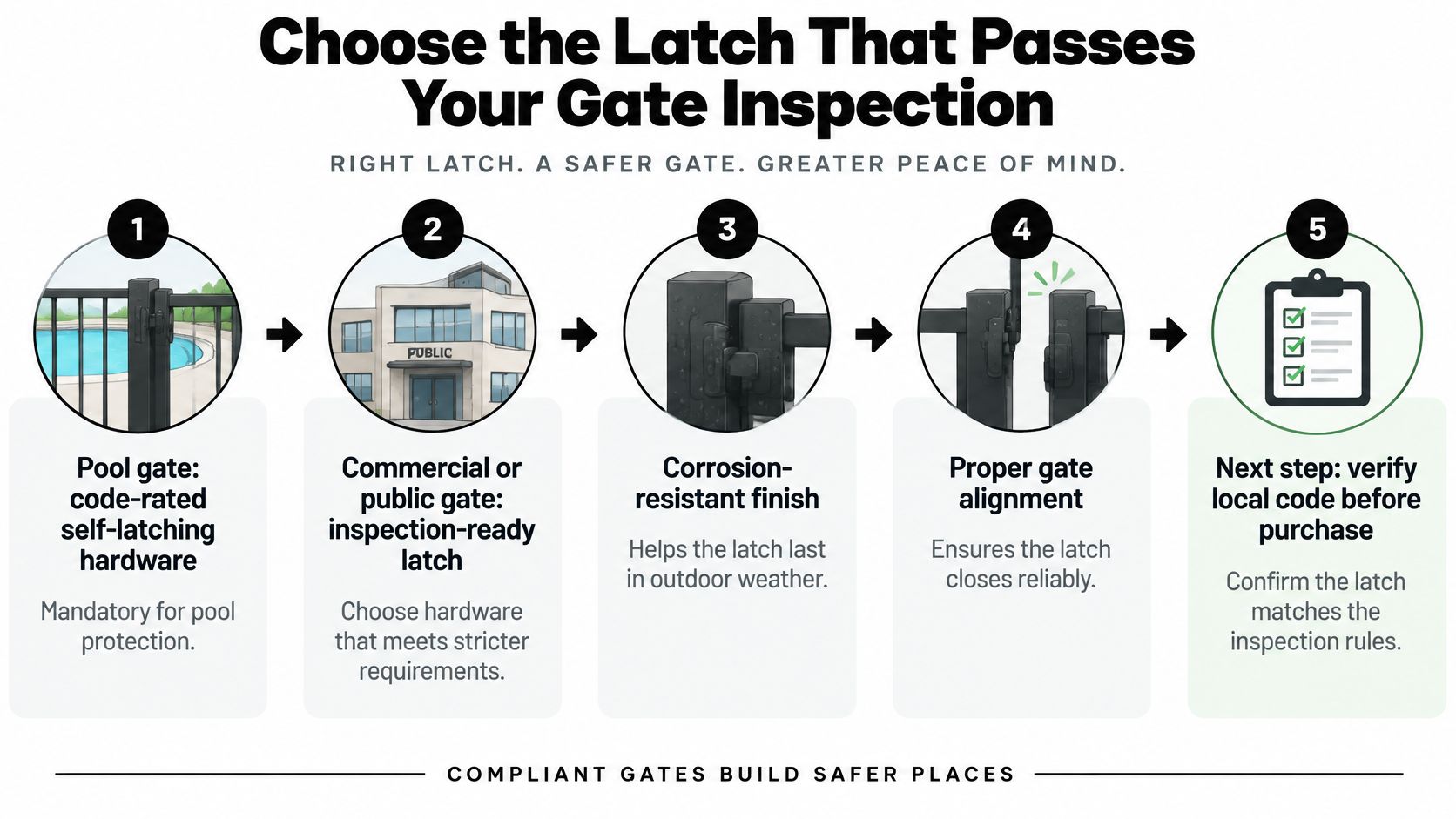
The decision checklist
- Pool gate: Code rated, self-latching hardware with a shielded release is mandatory, not an upgrade tier.
- Commercial or accessible route: Confirm the operable height range and choose a lever style release that works without tight grasping or twisting.
- Coastal lot: Specify stainless or marine grade fasteners with isolation between dissimilar metals.
- Locking need: Pick a keyed or lockable pool side release rather than adding a padlock that invites propping the gate open.
- Budget check: Compare price against compliance and service life, not against appearance.
Homeowners and HOA boards usually need the code check plus the corrosion specification. Commercial buyers add accessibility and access control on top. Hospitality, school, and healthcare properties should document the specification in writing so maintenance staff replace failed hardware with equivalent rated parts, not whatever's on the truck.
The next step before ordering
Photograph the gate and latch area from both sides. Measure release height, gate height, and the gap beside the latch post. Send those numbers and photos to a licensed installer for a code check before buying anything. AlliedFenceAndGate.com™ supplies self-closing pool-code hinges and latches in stainless steel or marine-grade aluminum, and the business is licensed, insured, and bonded, so buyers can request the inspection ready specification in writing.
That photo and tape step costs nothing and prevents the classic return trip. Hardware ordered against verified measurements fits the gate that exists, not the gate remembered from the driveway.
#MartinCountyFencing #PalmBeachCountyFencing #StuartFencing #JupiterFencing #PalmBeachGardensFencing #PortStLucieFencing #HobeSoundFencing #TreasureCoastFencing #AluminumFence #PoolFenceFlorida #GateLatch #PoolSafetyGate #AluminumGate #FenceInstallationFlorida #FenceContractorFlorida
AlliedFenceAndGate.com™ installs pool safety gates with self-closing, self-latching hardware specified for Florida code and coastal conditions across the Treasure Coast and northern Palm Beach County. Homeowners, HOA boards, and commercial buyers can send gate photos and measurements for a latch and geometry check before committing to hardware. Visit AlliedFenceAndGate.com™ to request an inspection ready gate specification and quote.
Related Fencing Services
Need a fence or gate on the Treasure Coast?
Licensed, insured, and bonded. Free estimates across Martin, St. Lucie, Indian River & Palm Beach counties.
Call (772) 530-3127