Chain Link Fence Rust Causes Fixes and Prevention
A homeowner in Stuart notices orange streaks beneath the chain link fabric after an afternoon storm. The gate still swings, the posts look straight, and the fence seems serviceable, so the first instinct is usually to grab a wire brush and paint. In Florida, that approach can miss the core failure. Chain link fence rust usually starts where the protective coating has been cut, burned, drilled, scraped, or attacked by salt-laden moisture.
For properties in Martin County, Palm Beach County, and the broader Treasure Coast, warm humidity, coastal air, chlorides, heavy rain, and wet vegetation create a demanding environment. A fence that performs well inland may need a different coating system near the coast. Federal fencing guidance warns that standard galvanized chain-link fencing can severely corrode in coastal locations in as little as 5 years under aggressive exposure. DoD corrosion guidance treats that risk as a design-life concern, not merely a cleaning issue.
Table of Contents
- Introduction Why Chain Link Fences Rust in Florida
- How Galvanization Protects Chain Link and Why It Fails
- Top Causes of Chain Link Fence Rust You Should Know
- How to Inspect Your Fence for Early Rust Signs
- Galvanized vs Vinyl Coated vs Aluminum for Rust Prevention
- Repair vs Replace When Rust Has Already Started
- Florida Maintenance Tips to Keep Your Chain Link Rust Free
Introduction Why Chain Link Fences Rust in Florida
A fence inspection usually tells a more useful story than a quick glance from the driveway. Orange marks at the bottom wire may point to wet grass and soil splash. Rust around a gate hinge can indicate hardware corrosion. A dark line beneath a weld may show that installation heat damaged the zinc coating. These conditions look similar from a distance, but they require different decisions.
The practical question isn't, “Can the rust be painted?” The better questions are:
- Where did the protective coating fail?
- Has corrosion reached the steel or weakened a connection?
- Is the problem localized, or does it appear throughout the fence line?
- Does the current material match the property's coastal exposure?
A licensed Florida contractor evaluating a fence weekly will look at the fabric, posts, rails, gate frames, tension bands, ties, hinges, latches, and fasteners as one system. That matters because a clean-looking mesh can still be supported by corroded posts or hardware. It also matters for pool fencing, boundary fencing, HOA work, and commercial perimeters where installation details, permits, and inspection records may affect the project.
Homeowners looking for a new or replacement system can review chain-link fencing services, but the material choice should follow the exposure rather than a generic preference. After reading this guide, a property owner should be able to identify early coating failure, separate a repairable spot from systemic corrosion, compare galvanized, vinyl-coated, and aluminum options, and decide when a licensed inspection is more appropriate than another coat of paint.
How Galvanization Protects Chain Link and Why It Fails
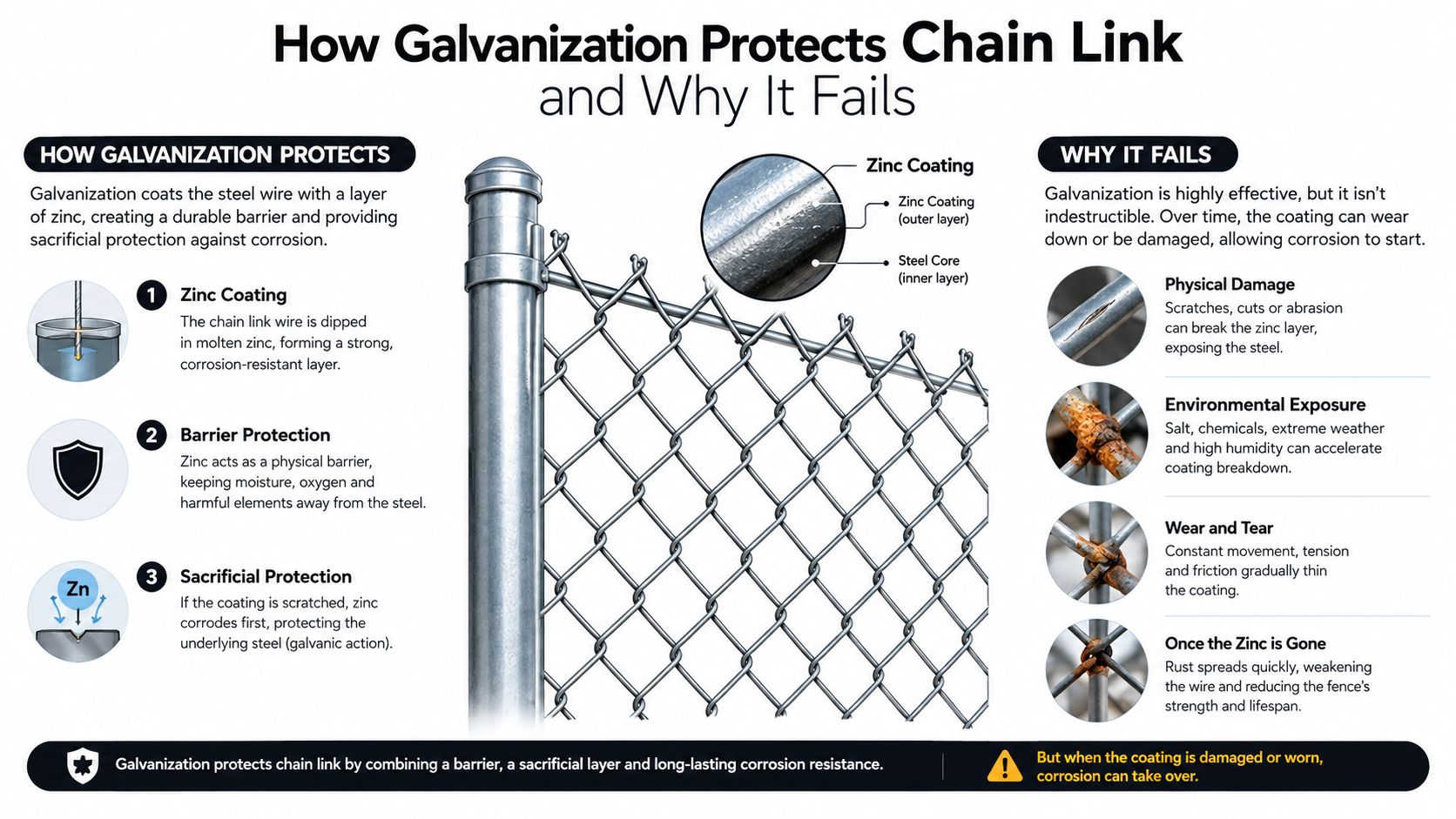
Galvanization protects steel with a zinc coating. Zinc corrodes preferentially, so the steel remains protected until the zinc layer is consumed. This sacrificial protection gives the fence a buffer against moisture, chlorides, and ordinary weathering, provided enough coating remains and water can drain away.
That protection has a service limit. Moisture, salt exposure, abrasion, and damaged edges gradually reduce the zinc layer. Red rust indicates that the underlying steel is losing effective protection, even when the visible mark is small.
Where the zinc barrier breaks
The vulnerable points usually come from fabrication, installation, or later modifications. Field cuts, drilled holes, weld burn-throughs, ground-down areas, and deep scratches expose steel directly or leave a thinner coating. Without zinc-rich protection at those locations, water reaches the exposed edge and corrosion starts there.
The same failure occurs after adding a latch, privacy attachment, sign, or other accessory. Each new hole interrupts the coating system. Clean the exposed steel and apply a suitable zinc-rich repair coating. Ordinary decorative paint does not replace the missing zinc protection.
A new fabric panel also cannot correct a failing support system. Homeowners comparing replacement materials can review chain link fence panels, including how the fabric connects to posts, rails, and fittings. Stronger mesh will not solve corrosion in existing posts or hardware.
Coating weight changes the corrosion runway
ASTM A392 Class 1 specifies a minimum zinc coating weight of 1.2 oz/ft², while Class 2 specifies 2.0 oz/ft², according to this ASTM chain-link corrosion guide. By weight, Class 2 contains about 67% more zinc than Class 1, leaving more sacrificial material to consume before red rust reaches the steel.
Class 1 is commonly suited to inland residential conditions. Class 2 gives more protection in humid or higher-exposure environments, including many Florida coastal applications. Neither class makes steel rust-proof. The specification only determines how much coating loss the fence can tolerate before the steel becomes exposed.
Practical rule: A galvanized label is not enough. Coating class, coastal exposure, installation damage, and the condition of posts and hardware determine how long the fence will perform.
Top Causes of Chain Link Fence Rust You Should Know
Rust diagnosis starts with the failure point, not the orange stain. On Florida fence projects, I classify corrosion by how the coating or assembly was breached. That distinction helps determine whether a small repair is appropriate or whether the specification and installation need broader correction.
| Breach type | Typical locations | What to check |
|---|---|---|
| Cut or trimmed steel | Fabric ends, gate openings, drilled posts | Exposed edges, rough texture, missing zinc-rich repair |
| Heat damage | Welds, gate-frame joints, repaired fittings | Burned coating, discoloration, rust radiating from the joint |
| Abrasion | Tie points, hinges, latches, moving hardware | Scratches, worn contact areas, loose or thinning fittings |
| Water retention | Post bases, bottom fabric, hardware joints | Persistent dampness, debris, soil, and flaking coating |
| Dissimilar-metal contact | Bolts, bands, hinges, and connected fittings | Localized staining, accelerated fitting loss, binding hardware |
Every cut end deserves a close check. Fabric may be trimmed around a gate, posts may be drilled for fittings, and welding can remove protective zinc. These locations often rust before the surrounding mesh because the steel no longer has a continuous coating system.
A stain identifies a starting point, not the full extent of failure. If corrosion is limited to a few exposed edges and the surrounding steel remains sound, cleaning and a suitable zinc-rich touch-up may be reasonable. Repeated corrosion at welds, tie points, post bases, and fittings points to an installation or specification problem rather than one isolated defect.
Moisture and exposure turn small breaches into active corrosion
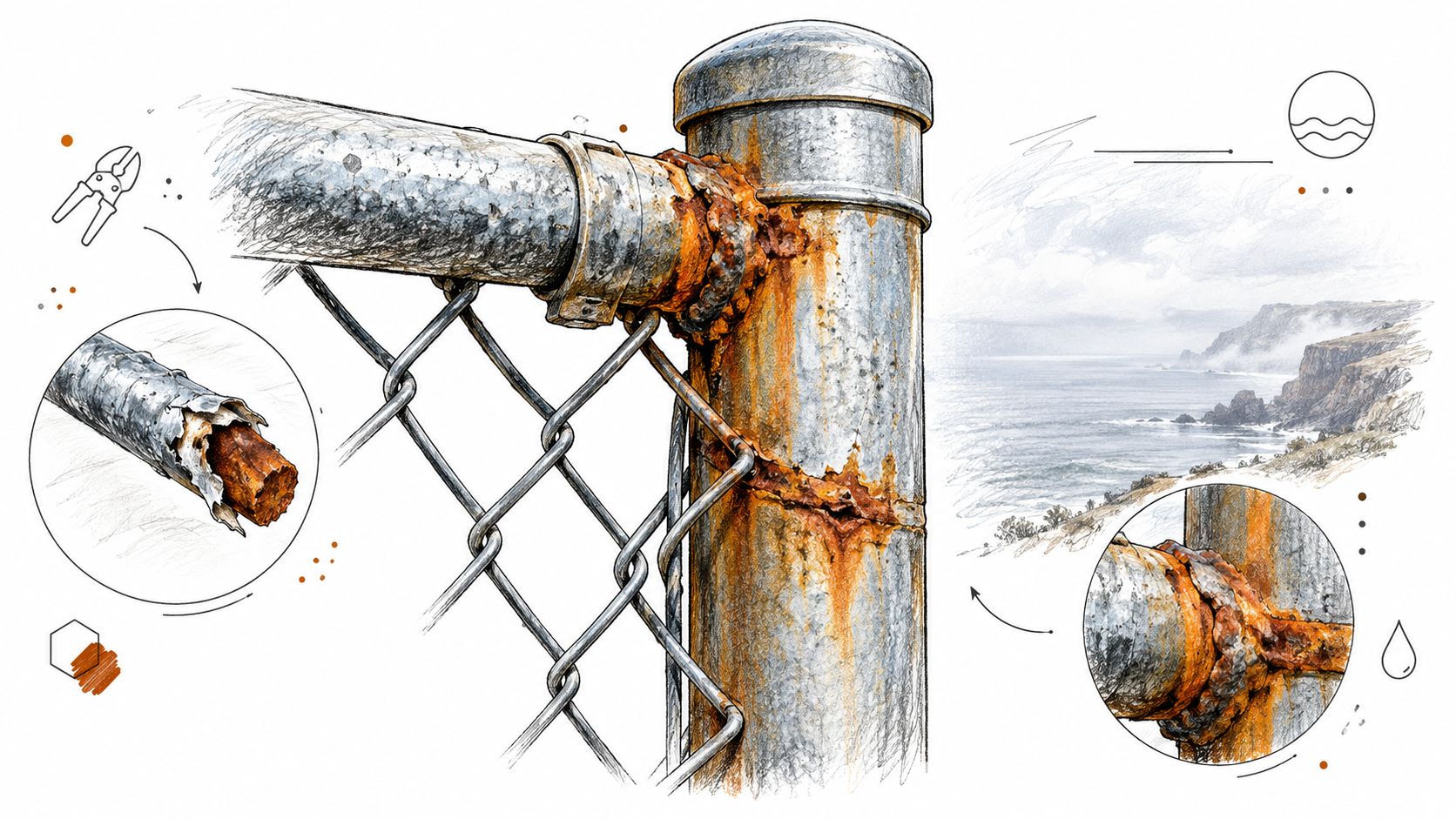
Vegetation, soil, and irrigation can keep a damaged area wet. Grass and vines press against the mesh, shrubs block airflow, and soil at a post base creates a persistent wet zone. Salt carried by coastal air makes those conditions more aggressive, especially where water collects around fittings or the lower edge.
Federal fencing guidance identifies warm, humid coastal locations with chlorides as particularly corrosive. It notes that standard galvanized steel can experience severe corrosion in as little as 5 years under those conditions. The practical question is whether the fence was specified and installed for its exposure, not only whether it carries a galvanized label.
Hardware can fail before the fabric
A fence operates as an assembly. Tension bands, bolts, hinges, latches, tie wires, rail fittings, posts, and gate frames may corrode at different rates. Compare the mesh with every connection. Light staining on the fabric can conceal a thinning tension band or a hinge that is beginning to bind.
Replacing one damaged fitting can preserve a serviceable gate. Widespread corrosion across connected hardware usually means isolated part replacement will only delay a larger repair. Active corrosion can spread beneath a damaged coating and retain moisture. The orange stain is often the symptom, not the complete failure.
How to Inspect Your Fence for Early Rust Signs
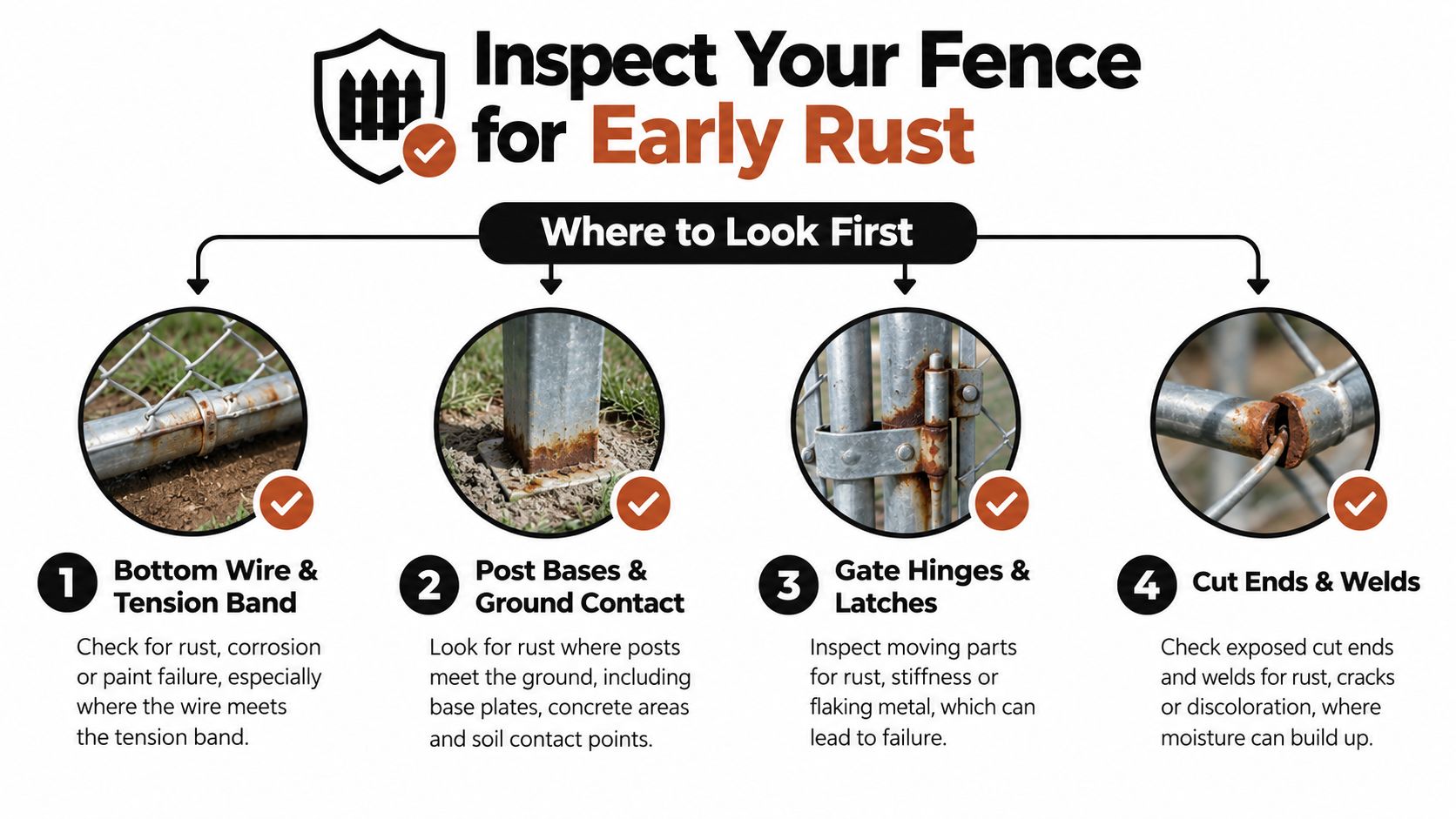
A useful inspection follows the water path and the load path. Start at the bottom, move upward, then examine every place where the fence transfers tension or movement. A bright sunny day after the fence has dried is ideal because staining, flaking, and damaged coating are easier to separate.
Start low and work around the gate
Bottom wire and tension band: Look for orange streaks, rough texture, flattened wire, and places where grass or soil stays against the fabric. A light whitish film can be zinc corrosion rather than red rust, but it still deserves monitoring.
Post bases and ground contact: Check for flaking, swelling, pitting, and soft spots around the post. Concrete that holds water against the steel can keep the base damp. Soil, mulch, and irrigation spray should not remain piled against the post.
Gate hinges and latches: Open and close the gate without forcing it. Binding, sagging, rust around hinge pins, or a latch that no longer aligns can indicate hardware deterioration rather than a simple adjustment issue.
Cut ends and welds: Examine corners, trimmed mesh, drilled fittings, gate-frame welds, and any location where a tool or welding operation may have interrupted the coating. These are common starting points for localized corrosion.
Separate early signs from advanced damage
Early rust usually appears as isolated orange staining, a small rough patch, or corrosion around a fastener. Advanced deterioration brings flaking metal, deep pitting, enlarged holes, broken ties, loose tension, distorted mesh, or a gate frame that has lost stiffness. A screwdriver should not be used to gouge the fence, but gentle visual and tactile checks can reveal whether a surface is merely stained or actively shedding material.
Document the condition with clear photographs that show the full fence line and close-ups of each defect. Documentation helps with contractor estimates, storm-related records, HOA discussions, and insurance conversations. It also allows a later inspection to compare whether corrosion has remained stable or spread.
Florida properties benefit from annual inspections, with additional checks after major storms, landscaping work, or modifications. The aim isn't to create a complicated maintenance program. It is to find coating failure before the steel, posts, or hardware lose structural function.
Galvanized vs Vinyl Coated vs Aluminum for Rust Prevention
Material selection should follow exposure, appearance, use, and the maintenance the owner will perform. An inland residential yard may be well served by galvanized steel. A coastal lot with salt-laden air may justify PVC-coated steel over zinc or an aluminum fence. The lowest initial cost is a poor trade if corrosion later reaches posts, rails, fittings, or gate frames.
Use the coating class as a specification decision, not just a product label. For Treasure Coast coastal lots, specify Class 2 or PVC-over-zinc where the added corrosion reserve fits the exposure. Reserve Class 1 for less aggressive inland properties that can receive regular inspection and timely touch-up. Unprotected cuts, welds, drilled fittings, and damaged edges remain weak points in every steel system.
| System | Coating Protection | Best For Florida | Maintenance Level |
|---|---|---|---|
| Galvanized Class 1 | Standard zinc sacrificial protection | Inland residential exposure with ordinary moisture conditions | Moderate, with inspection and prompt touch-up |
| Galvanized Class 2 | Heavier zinc sacrificial layer | Humid locations and properties with higher exposure than typical inland sites | Moderate, with more coating reserve |
| PVC or vinyl-coated steel over zinc | Polymer barrier over a metallic-coated core | Coastal or chloride-exposed properties where an added barrier is appropriate | Moderate, because cuts and chips still need attention |
| Aluminum-coated steel | Aluminum-based corrosion-resistant coating | Aggressive environments where standard galvanized steel is a poor design choice | Moderate, with attention to damage and joints |
| Aluminum fencing | Non-steel fence option with corrosion-resistant characteristics | Decorative, pool, and coastal applications where the design fits | Low to moderate, depending on hardware and exposure |
Galvanized steel
Galvanized chain link remains practical, visible, and straightforward to repair. Class 1 fits many inland residential installations. Class 2 gives humid or more exposed properties greater coating reserve, but it does not eliminate inspection or repair of damaged areas.
Installation quality still controls service life. Cut ends, welds, and drilled locations need suitable protection, because exposed steel can become a localized rust point even when the surrounding mesh is sound.
Vinyl-coated and aluminum systems
PVC-coated-over-zinc steel adds a polymer barrier over the metallic-coated core. It suits coastal or chloride-exposed properties when appearance and added barrier protection matter. It is not damage-proof. A cut, chip, or failed edge can expose the steel, so installers must protect those areas and inspect them.
Federal guidance identifies aluminum-coated steel and PVC-coated-over-zinc steel as choices for aggressive environments. The federal corrosion reference supports treating coastal material selection as a design decision rather than a maintenance afterthought.
Aluminum fencing changes the system instead of adding another coating to steel. It can fit pool enclosures, decorative boundaries, and coastal properties where its appearance, layout, and construction method work for the site. For a direct comparison of finish and maintenance considerations, review aluminum fence versus vinyl.
Specify performance in measurable terms for severe exposure. One U.S. fencing specification requires protection capable of surviving 300 hours of ASTM B117 salt-spray exposure with no more than 5% red rust at the endpoint. The fencing specification shows why a project specification should define coating and test requirements instead of relying on the word “durable.”
Repair vs Replace When Rust Has Already Started
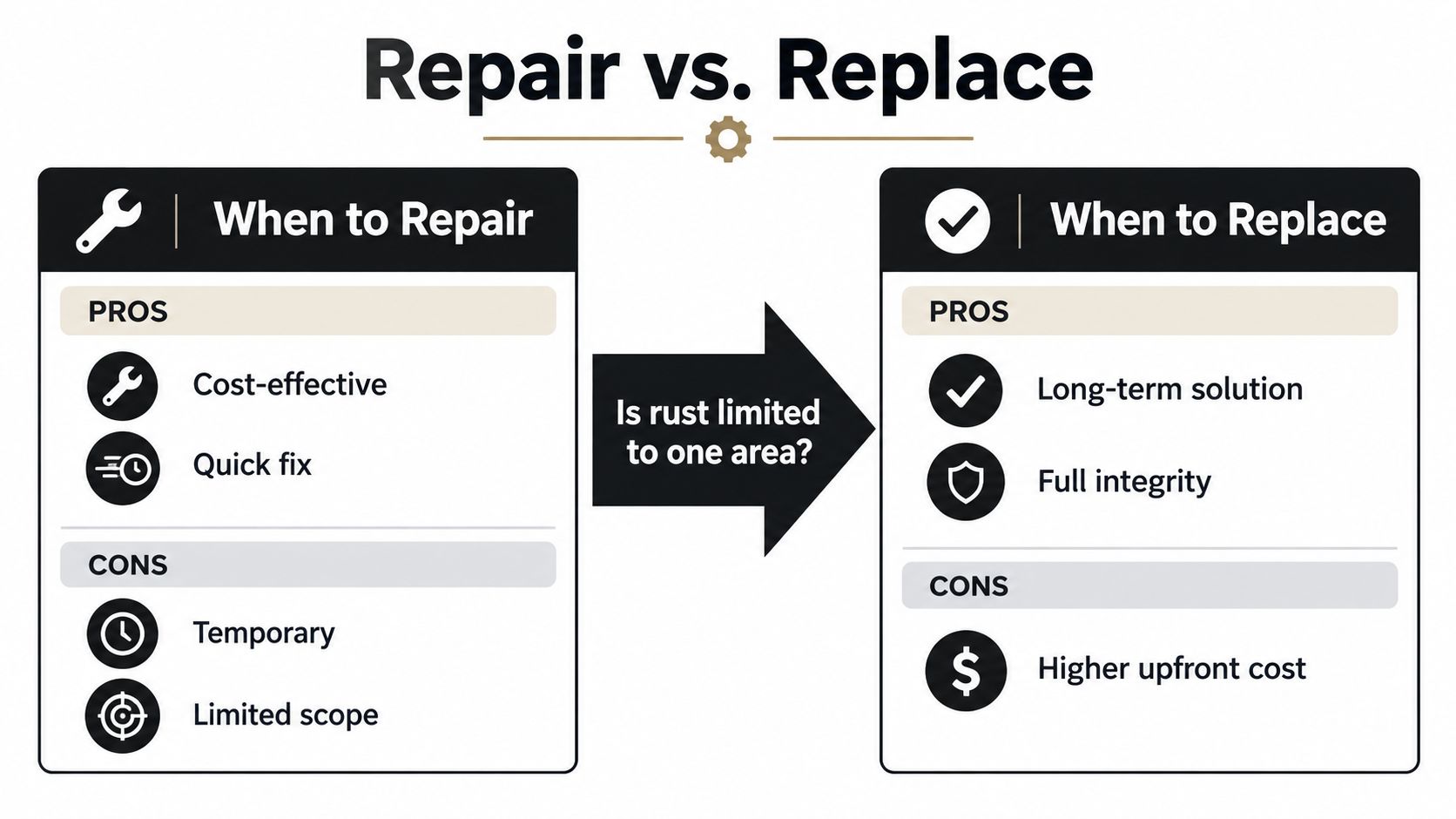
Repair makes sense when corrosion is localized, shallow, and structurally isolated. Replacement becomes more sensible when rust appears across multiple components or has reduced the strength of the fabric, posts, gate frames, or connections. The decision should follow the condition of the steel, not the color of the stain.
A practical repair sequence starts with cleaning. Loose rust and debris must be removed without damaging sound coating around the spot. The surface then needs to dry before a zinc-rich galvanizing repair coating is applied to exposed steel. Ordinary paint over active rust may hide the defect, but it doesn't restore sacrificial protection and can trap moisture beneath the coating.
Conditions that support repair
A contractor may recommend spot repair when the affected area is limited to a cut end, a small scratch, or an individual fitting. Hardware such as a hinge, latch, tension band, or fastener can sometimes be replaced without disturbing the full fence line. The surrounding mesh and posts should remain firm, with no significant pitting, broken strands, or loss of tension.
The repair should also correct the cause. That may mean clearing vegetation, improving drainage, replacing a corroded fitting with compatible hardware, or sealing a newly drilled edge with zinc-rich material. Without that step, the same location may rust again.
Conditions that support replacement
Replacement deserves serious consideration when corrosion is distributed through welds, post bases, gate frames, and hardware. Flaking, deep pitting, enlarged holes, broken wire, loose posts, and a gate that no longer holds alignment indicate more than cosmetic surface rust. Replacing only the mesh while leaving failing posts can produce a visually improved fence with the same underlying weakness.
A property owner should also consider the environment. Guidance from the Defense Technical Information Center explains that zinc coatings protect steel sacrificially and that corrosion accelerates where the coating is compromised, especially in chloride-rich conditions. In an aggressive coastal setting, replacing the fence with a better-suited coating system may provide more dependable design life than repeating small repairs.
Painting over rust isn't a corrosion repair. The exposed steel and the moisture source must be addressed first.
Florida Maintenance Tips to Keep Your Chain Link Rust Free
Florida maintenance works best when it removes moisture and catches coating damage early. Homeowners and property managers in Martin County, Palm Beach County, and the Treasure Coast can use a simple routine:
- Rinse salt deposits: Wash exposed fence surfaces with fresh water after salty weather or visible coastal residue. Let the mesh and hardware dry.
- Clear vegetation: Keep vines, grass, mulch, and shrubs from pressing against the fabric or holding water near the bottom wire.
- Inspect annually: Check post bases, gate hardware, tension bands, ties, cut ends, welds, and the bottom edge. Take photographs of anything that changes.
- Touch up damage promptly: Clean exposed steel and apply a suitable zinc-rich repair product instead of leaving cuts, chips, or drilled holes untreated.
- Check drainage: Keep irrigation and roof runoff from repeatedly soaking post bases. Remove soil buildup that holds water against the steel.
- Review the specification before replacement: Match galvanized class, PVC-coated-over-zinc steel, aluminum-coated steel, or aluminum construction to the property's actual exposure.
- Use licensed project support: For new work, pool fencing, boundary changes, or post replacement, confirm permitting requirements and arrange 811 utility locates before digging.
Small maintenance habits won't compensate for an unsuitable coating system, but the right material can still fail early if damaged edges and wet hardware are ignored. Rust prevention is both a maintenance practice and a materials decision.
AlliedFenceAndGate.com™ provides chain link, PVC or vinyl, aluminum, wood, pool, and commercial fencing services across Florida's Treasure Coast and northern Palm Beach County, with permitting, 811 utility locates, and inspection coordination available for applicable projects. Homeowners can visit AlliedFenceAndGate.com™ to request an assessment focused on chain link fence rust, coastal exposure, repair scope, or replacement material selection.
#MartinCountyFencing #PalmBeachCountyFencing #TreasureCoastFencing #StuartFencing #JupiterFencing #PortStLucieFencing #FloridaFencing #CoastalFencing #ChainLinkFence #ChainLinkFencing #FenceRepair #FenceInstallation #GalvanizedFence #VinylCoatedFence #AluminumFencing
Related Fencing Services
Need a fence or gate on the Treasure Coast?
Licensed, insured, and bonded. Free estimates across Martin, St. Lucie, Indian River & Palm Beach counties.
Call (772) 530-3127