Fence Installation Financing Options in Florida
A fence quote can feel simple until the numbers start moving. A homeowner on the Treasure Coast gets a price, sees the deposit requirement, hears about permits and 811 locates, then realizes the question isn't just how to pay for the fence. It's how to finance a project that may change before the first post hole is dug.
That's where fence installation financing gets tricky in Florida. The smartest move is not chasing the lowest monthly payment first. It's structuring the loan around the actual job timeline, deposit, midpoint, completion, and any scope changes that show up after utility locates or code review.
Table of Contents
- Why Fence Financing in Florida Feels Different
- What a Real Fence Project Costs on the Treasure Coast
- Comparing Your Financing Options Side by Side
- Documents and Pre-Work That Speed Up Approval
- Using Insurance Claim Advances and InsureFENCE for Storm Damage
- From Application to Final Inspection Step by Step
- Your Fence Financing Checklist Before Signing
Why Fence Financing in Florida Feels Different
A fence project in Florida rarely stays frozen at the first quote. A homeowner may start with a clean estimate, then learn that utility locates, permit conditions, or pool-barrier rules change the scope before work begins. That's why financing should follow the job, not just the first number on the page.
The quote is not the final number
On Treasure Coast projects, a contractor may ask for a 50% deposit and the balance on completion, which is a practical payment structure for labor, materials, and scheduling. That split works only if the homeowner has enough room in the budget for changes that show up after the estimate is written. If the loan is sized too tightly, the borrower ends up scrambling when the scope expands.
Three Florida-specific issues push the final amount around. First, underground utilities often force reroutes or redesigns after 811 locates. Second, county permit rules can trigger setbacks, height changes, or layout revisions. Third, pool and baby-barrier compliance can add hardware or design requirements that weren't in the first draft.
Practical rule: Borrow against the realistic upper bound, not the prettiest first estimate. If the project has moving parts, the financing should have room for them.
That matters even more on smaller jobs, because the $750 minimum project value means financing only makes sense when the work is substantial enough to justify the paperwork, approval time, and payment structure. A homeowner should keep a reserve for change orders instead of financing the exact estimate and hoping nothing shifts. That's how the job stays funded without overborrowing.
What a Real Fence Project Costs on the Treasure Coast
A fence quote in Florida is built from more than material and linear footage. Height, gates, demolition, soil, access, coastal corrosion resistance, wind exposure, permits, and pool-barrier requirements can change the amount you need to finance. In Martin County, St. Lucie County, and Palm Beach County, a basic inland estimate often does not describe the finished project.
Installed pricing by common material
A 200-linear-foot project shows how quickly material choice changes the borrowing need. These installed ranges are published in this Treasure Coast fence cost breakdown and should be treated as a starting point, not a guaranteed quote.
| Material | Per Foot Installed | 200 LF Project Total |
|---|---|---|
| Aluminum | $32 to $55 | $6,400 to $11,000 |
| Vinyl | $28 to $50 | $5,600 to $10,000 |
| Chain Link | $15 to $30 | $3,000 to $6,000 |
| Wood | $22 to $45 | $4,400 to $9,000 |
The table gives you a material baseline. Your financing should follow the contract and the project timeline, not the first estimate. Confirm the scope before applying, then account for the deposit, any midpoint draw, and the final payment at completion. That structure helps prevent borrowing the upper limit before utilities, permitting, or code review confirm what the crew can build.
Gates, removal of an existing fence, root-heavy soil, restricted access, and pool-code hardware can raise the final amount quickly. Include those items in the written scope and ask how each one affects the payment schedule. A loan sized only for the cleanest version of the project can leave a shortfall when the contractor is ready to build.
Keep a reserve for approved changes rather than financing every possible contingency on day one. If storm damage is involved, an insurance claim advance can also be matched to the covered repair stage, reducing the time you carry unused borrowed funds.
Contractor's rule: Borrow against a realistic upper bound, not the lowest first estimate. Release funds as the job reaches its agreed milestones, and make sure the contract explains what happens if permitting or site conditions change.
Comparing Your Financing Options Side by Side
A Florida fence estimate is not always the amount you will finance. Utility conflicts, permit requirements, property lines, and code review can change the scope after the first visit. Choose financing only after the written estimate is clear, then match the loan to the deposit, midpoint draw, and final payment.
What wins on cost, speed, and control
Contractor financing usually wins on speed. Programs arranged through contractors, including partners such as Synchrony or HFS, may provide approval in minutes while the crew is ready to schedule. That convenience can carry a higher cost, so ask for the total repayment amount, promotional-period rules, and the payment due if the project changes after permitting.
Personal loans from banks, credit unions, or online lenders offer fixed payments and no lien on the home. They suit homeowners who want predictable payments without pledging property equity. Compare the term and total interest, not just the advertised monthly payment. Fund the approved contract amount, not an inflated contingency balance.
HELOCs and home equity loans can offer lower rates because the home secures the debt. The tradeoff is additional paperwork, possible appraisal and closing costs, and exposure tied to the property. Use this route only when the project size justifies the longer setup and you understand how the payment schedule fits the fence contract.
Credit cards fit only when the balance can be cleared quickly. A variable rate can make a short job expensive if the balance remains after installation. Do not use a card to cover an uncertain scope when utilities, permits, or code review could increase the final invoice.
In-house payment plans deserve a line-by-line comparison. Ask whether the offer is 0% deferred interest or a fixed rate, confirm the term, and calculate the total owed if the project reaches the approved upper bound. Then compare that figure with a credit-union loan, including origination fees and interest. The contractor plan is useful when its payment milestones match the deposit, midpoint, and completion dates. It is a poor choice when interest starts before the contractor draws the money.
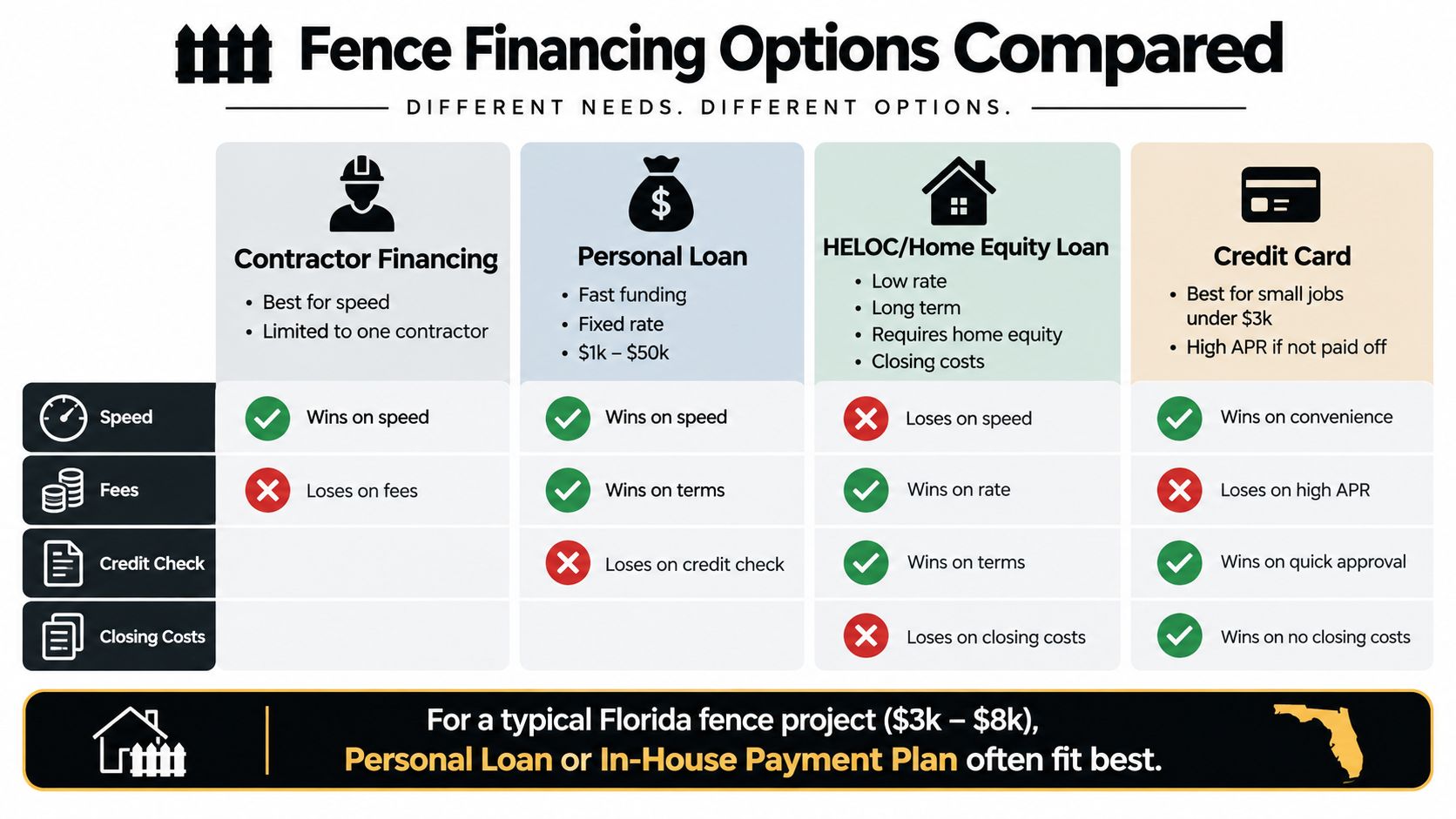
For many Treasure Coast and Palm Beach County jobs, a personal loan or properly structured contractor plan is easier to align with the work than a home-equity product. Keep the loan amount tied to the signed scope and release schedule. If storm damage is involved, coordinate any insurance claim advance with the covered repair stage so you do not pay interest on funds sitting unused. Freddie Mac's cited 2015 housing data reported $142 billion in home improvement spending, with about 73% of homeowners planning to use cash, 17% a home equity loan or HELOC, and 12% a personal bank loan (Freddie Mac via LendingTree).
Documents and Pre-Work That Speed Up Approval
A financed fence job moves faster when the lender sees a clean file. Sloppy paperwork slows approvals, and sloppy scope language creates financing gaps later. The goal is to make the loan match the work before anyone starts digging.
What to gather before applying
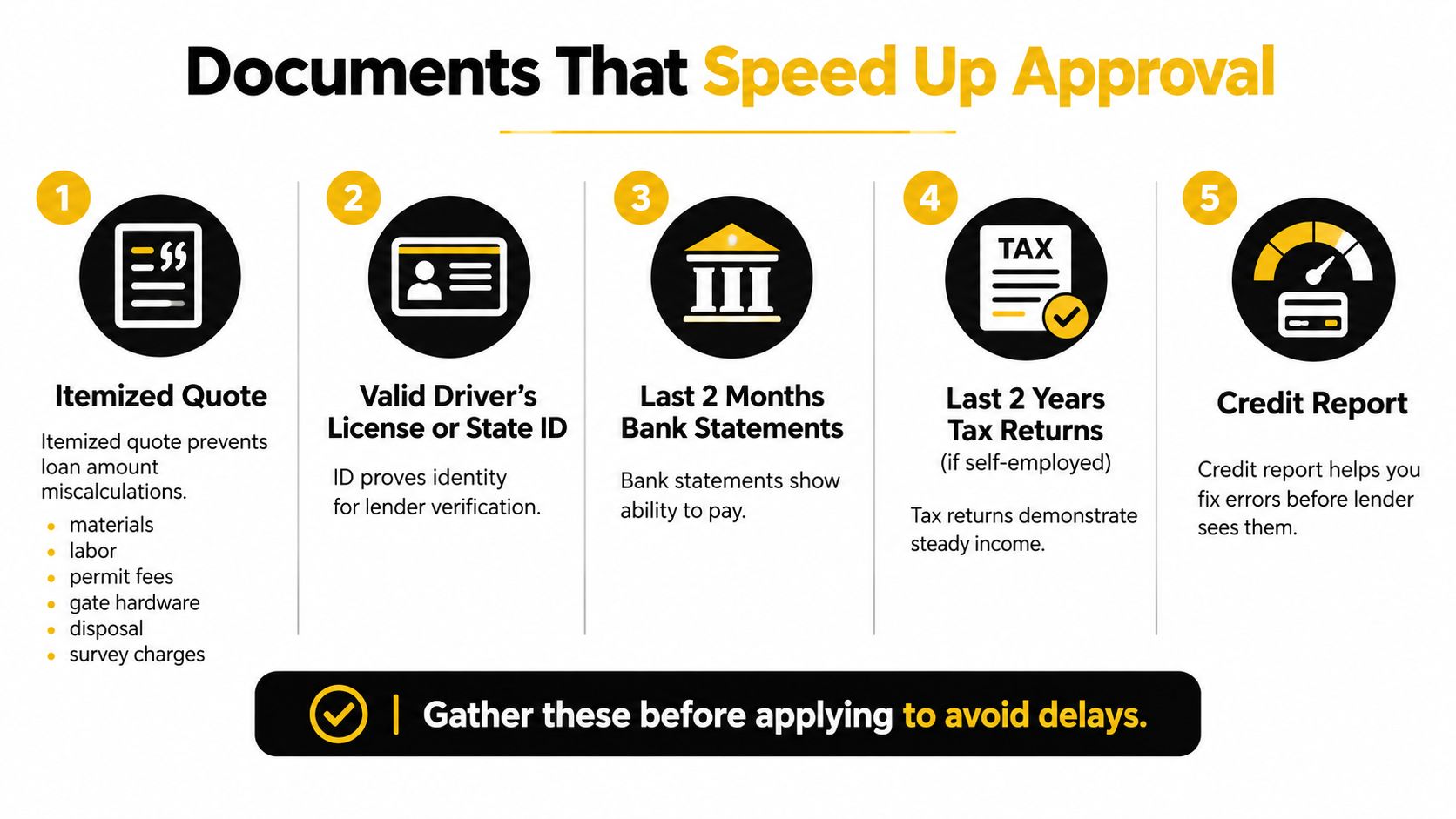
Start with a line-item quote that separates materials, labor, permit fees, gate hardware, disposal, and survey charges. That keeps the lender from funding a vague lump sum that doesn't reflect the job. It also helps the homeowner see where the money is going.
Then make sure the permit status is clear for the county involved, whether that's Martin County, St. Lucie County, or Palm Beach County. A fence installed outside permit rules can create trouble later with both financing and insurance. If the project follows a storm, include the insurance declarations page and the adjuster's report as part of the file.
The usual income documents matter too. Two recent pay stubs, a W-2 or 1099, and three months of bank statements give the underwriter enough to work with. If the homeowner is self-employed, tax returns usually help the file move more smoothly.
Digital estimators are useful because they turn a rough idea into a signed PDF the lender can actually read. That can cut the back-and-forth that kills momentum.
A digital estimator that exports a clear quote, plus photos of the property corners, gives the lender a cleaner path to same-day underwriting than a handwritten estimate ever will. The checklist below makes the file easier to approve and easier to defend if scope questions come up later.
Using Insurance Claim Advances and InsureFENCE for Storm Damage
Storm damage changes the financing conversation. Once a fence has been torn up by hurricane or tropical-storm winds, the homeowner is no longer just buying a new fence. The homeowner is coordinating contractor work, insurance money, and maybe a temporary claim advance that lets the job start before the final settlement lands.
How a claim advance fits the project
An InsureFENCE-style claim advance is built for the gap between the insurer's first check and the actual cost of rebuilding. It can move money forward so demolition and materials can start without waiting for every dollar of recovery to clear. That matters when the yard needs to be secured quickly and the homeowner can't afford a long delay.
The policy language matters here. Actual Cash Value (ACV) pays differently from Replacement Cost Value (RCV), and the structure of the policy controls how much arrives up front versus later. A representative storm claim may start with an ACV check that covers only part of the replacement amount, then release recoverable depreciation after the work is complete.
| Stage | RCV Policy | ACV Policy |
|---|---|---|
| First payment | Larger initial payment tied to replacement scope | Lower initial payment based on depreciated value |
| Mid-project funding | Additional payment possible as work progresses | May still require homeowner cash or financing |
| Final payment | Depreciation released after completion | Often no additional replacement-based release unless policy allows it |
The smartest move is to coordinate the advance with the contractor's deposit schedule and share the adjuster's scope sheet before signing anything. If the homeowner changes materials or expands the scope later, the repayment terms on the advance need to be clear up front.
For claim-specific scope review, Allied Fence & Gate's InsureFENCE scope scanner explanation shows how claim documents can be compared against the actual rebuild plan before money changes hands.
Storm money should be matched to storm scope. If the claim covers a vinyl perimeter and the homeowner upgrades to something else midstream, the numbers need to be rechecked before the next payment goes out.
From Application to Final Inspection Step by Step
The cleanest financing process follows the work, not the paperwork pile. A homeowner who locks the scope early and releases money in stages has fewer surprises than one who borrows a lump sum and hopes the project stays stable. That's especially true when permits, utility locates, and inspections can all move the schedule.
The sequence that keeps the money aligned
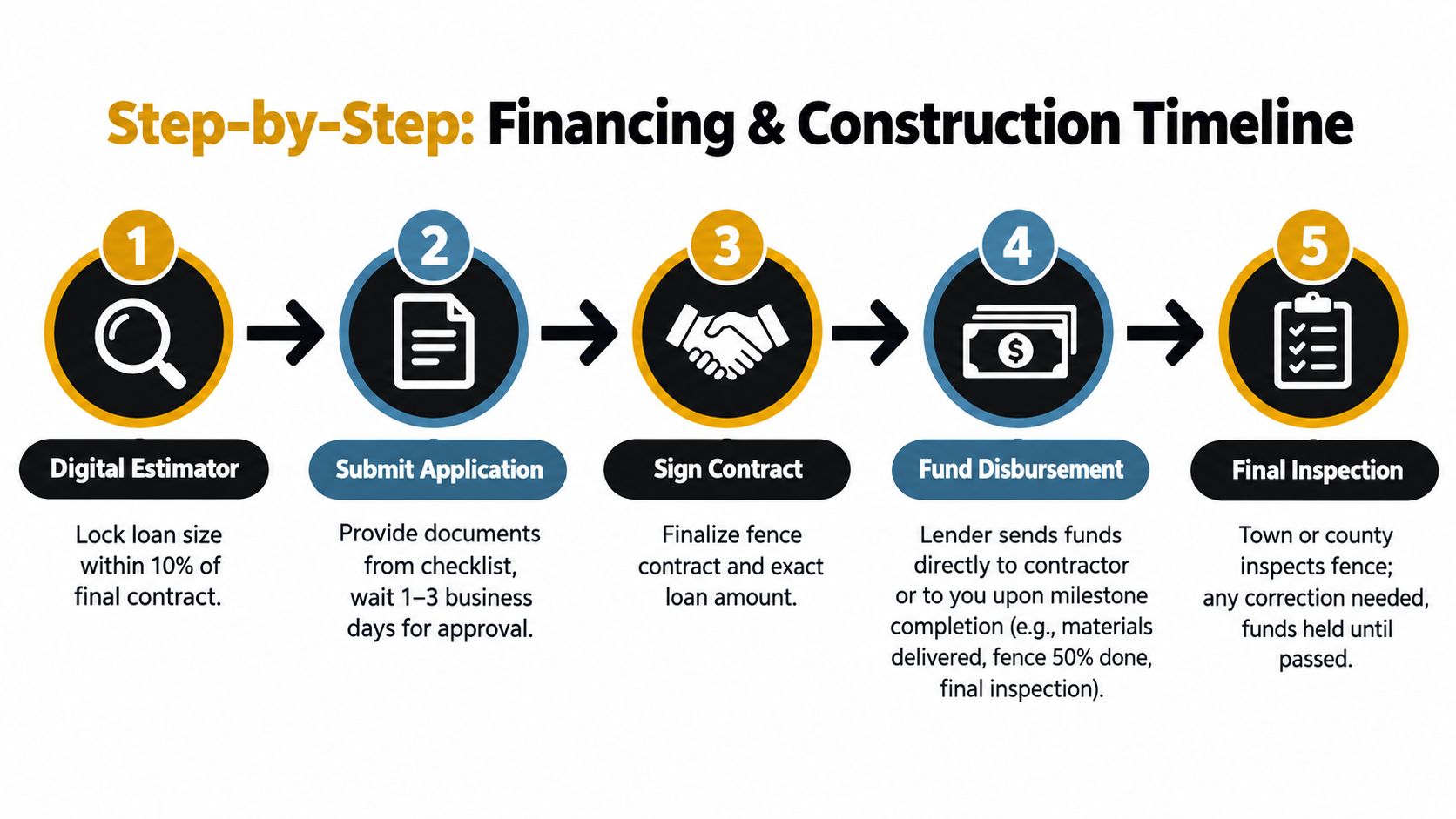
Start with a digital estimator and lock a loan target within about 10% of the final contract. That gives the borrower a realistic funding window without padding the file so hard that interest gets paid on money never used. It also makes the lender's review easier.
Apply for contractor financing, a personal loan, or a HELOC draw in the same week. Conditional approval often comes back in one to three business days, which keeps the project from stalling while materials are waiting. Once approval is in hand, the homeowner can sign with confidence.
The contract should reflect the standard 50% deposit and balance on completion structure used on many Treasure Coast projects. If the contractor uses milestone draws, those payments need to be written clearly so the borrower knows when funds are moving. Ambiguity here causes disputes later.
- Run the estimate. Lock the target amount before the final paperwork is signed.
- Submit the financing file. Include the quote, income documents, and permit details.
- Sign the contract. Match the loan amount to the job value and deposit schedule.
- Call in the 811 locate. Schedule it at least two business days before digging.
- Pull the county permit and build. Release money only when the job hits the agreed milestone.
- Complete inspection and final payment. Hold the last funds until the fence passes.
If underground utilities, hidden concrete, or another scope surprise appears mid-project, the loan amount should be amended before the next draw, not after the job is over. That keeps the homeowner from paying interest on guesswork and keeps the contractor from waiting on funds that no longer match the work.
For permit timing and county coordination, Allied Fence & Gate's permit application guide is worth checking before the first hole is dug.
Your Fence Financing Checklist Before Signing
A homeowner in Treasure Coast or Palm Beach County should lock four things before signing. The order matters because each one controls a different kind of risk, and none of them should be left vague until installation day.
Screenshot this before the contract meeting
- Match the loan to the project cost. Pull the line-item quote and include a buffer for permits, utility-related changes, and disposal.
- Confirm permit and 811 timing in writing. Call the building department, then make sure the locate and permit schedule are documented before money is released.
- Verify the deposit and progress-payment schedule. Ask for the deposit percentage, midpoint draw, and completion balance in the contract.
- Choose the right funding source for storm work. Compare an InsureFENCE-style claim advance against traditional financing by checking ACV and RCV payout timing.
The smartest sign-off happens when the homeowner knows what the fence really costs, what the county will require, and what the lender will fund. If those three pieces line up, the job moves cleanly. If they don't, the project turns into delay, interest, and avoidable change orders.
AlliedFenceAndGate.com™ handles fence estimating, permitting, utility locates, and inspection coordination for Treasure Coast and northern Palm Beach County projects, so homeowners can line up financing with the actual scope instead of guessing at the final number. For a fence quote that accounts for deposits, permits, and payment timing, visit AlliedFenceAndGate.com™ and compare the project plan before signing anything.
Related Fencing Services
Need a fence or gate on the Treasure Coast?
Licensed, insured, and bonded. Free estimates across Martin, St. Lucie, Indian River & Palm Beach counties.
Call (772) 530-3127