Should You Stain Cedar Fence in Florida?

Staining cedar is an ongoing choice, not a one-time fix. It can help preserve color and limit UV and moisture exposure, but Florida weather means the fence will need attention again. USDA testing found that a semitransparent penetrating stain on smoothly planed wood fully exposed to weather lasted about 2 to 3 years after its first application. Results on rough-sawn or weathered wood could last longer under the tested conditions.
Cedar can resist decay and still fade, crack, check, and weather in sun and rain. Homeowners who want to retain its appearance need to monitor the surface and plan for recoating. Those who prefer natural weathering can leave the boards untreated, accepting the change in color and the different maintenance demands. Surface condition and exposure help determine when staining makes sense.
Table of Contents
- Why Cedar Needs Protection Even When It Is Durable
- Stain, Sealant, or Natural Weathering Compared
- How Florida Sun, Humidity, and Salt Shape the Decision
- Timing and Surface Prep Before the First Coat
- Building a Recoat Schedule You Can Follow
- Cost and Return on Investment for Stained Cedar
- When to Hire a Pro and Your Next Step
Why Cedar Needs Protection Even When It Is Durable
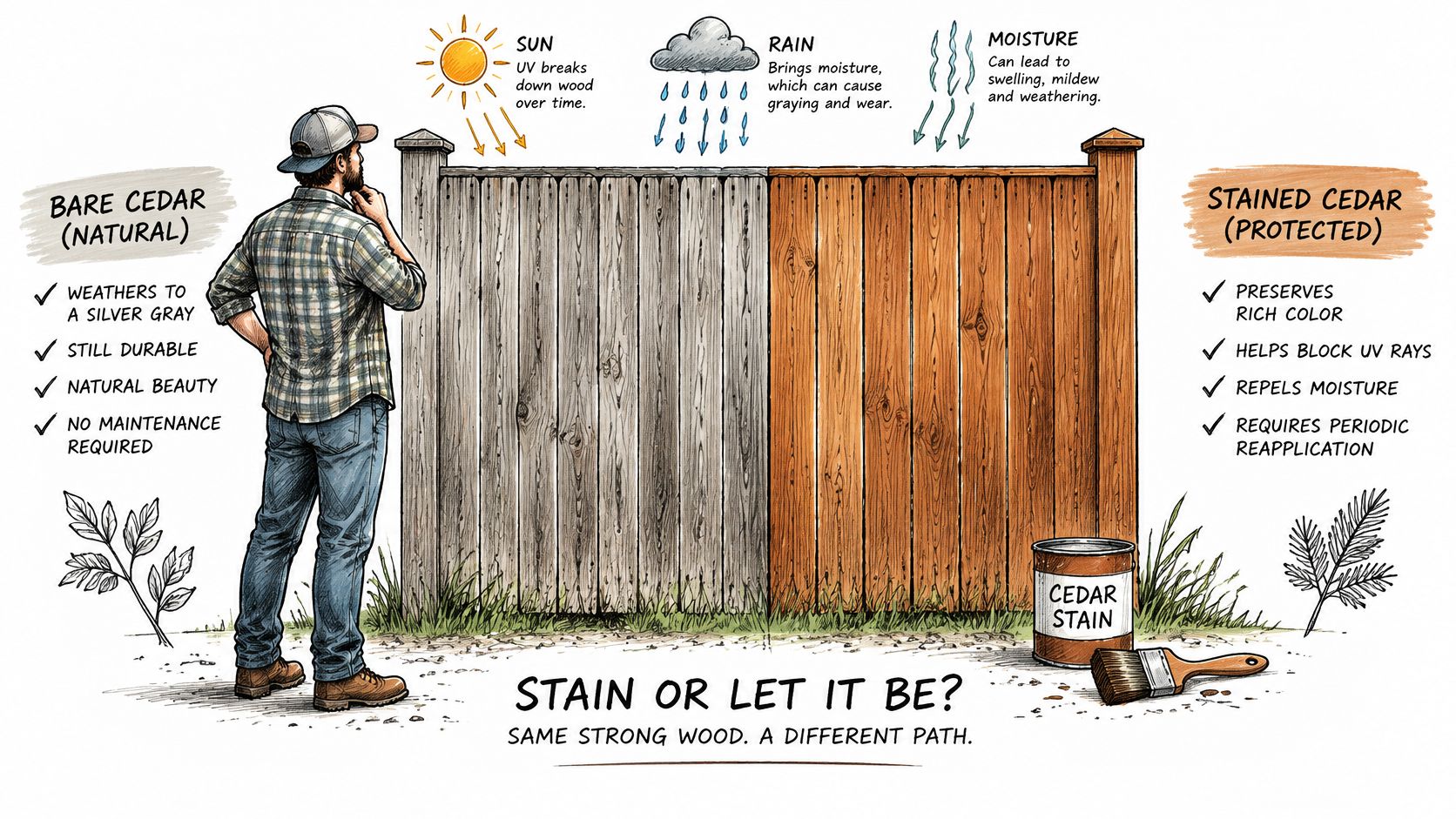
Cedar can resist decay and still weather at the surface. Its natural durability helps protect the wood from biological decay, but exposed boards remain vulnerable to sunlight, wind, airborne debris, and moisture. The Forest Products Laboratory reports that unprotected softwoods such as cedar lose approximately 1/4 inch (6 millimeters) of wood per century on vertical exposures, with greater loss under severe exposure conditions. USDA Forest Products Laboratory guidance on exterior weathering
Surface change may appear as silver-gray color, roughness, or checking while the heartwood remains comparatively durable. For Florida homeowners, the choice is whether to control that exposure with a finish or accept the changing surface and its maintenance trade-offs.
Protection means managing exposure, not preventing all aging
Staining is a recurring way to manage ultraviolet and moisture exposure while influencing the fence's appearance. It can reduce sunlight damage and moisture absorption, but it cannot stop aging or guarantee the boards will not deteriorate. Forest Products Laboratory guidance says semitransparent stains block sunlight more effectively than clear water-repellent preservatives, particularly when they contain ultraviolet inhibitors.
If you want cedar to retain more of its original color and limit checking, an exterior stain compatible with the wood is a practical option. It also means inspecting the finish and recoating as it wears. If you prefer the silver-gray look, leaving the boards unfinished avoids coating upkeep, while allowing discoloration and surface erosion to continue.
Practical rule: Choose the finish, or natural weathering, based on the appearance you want and the upkeep you will actually maintain.
Stain, Sealant, or Natural Weathering Compared
Staining is a recurring decision about sunlight, moisture, and the fence's condition, not a one-time cosmetic upgrade. A pigmented semitransparent stain offers more sunlight blocking than a clear water-repellent preservative, while still showing the cedar grain. Clear preservative can help manage water exposure, but provides less UV protection. Leaving cedar unfinished avoids coating upkeep and accepts gradual color change and surface weathering.
| Option | UV Protection | Appearance Over Time | Upkeep Commitment |
|---|---|---|---|
| Pigmented semitransparent stain | Better sunlight blocking than a clear water-repellent preservative, especially with UV inhibitors | Can retain or deepen cedar's original color while showing grain | Inspect and renew as the finish wears |
| Clear water-repellent preservative | Less effective at blocking sunlight than semitransparent stain | Allows natural color changes to remain visible | Inspect and renew as needed |
| Natural weathering | No applied UV protection | Gradually turns silver-gray and continues to weather | No coating schedule, but surface aging continues |
The trade-off is straightforward: more pigment generally means a more visible color, and more coating means a recoat task to keep up with. Decide whether preserving cedar's warmer color is worth that ongoing work before choosing a product. If the boards already show peeling, uneven color, or surface wear, assess their condition before applying a new finish.
Pick a finish family before comparing labels
Choose a pigmented semitransparent stain to retain or enrich cedar's original look without hiding the grain. Weathering stains are different: they're made to move the wood toward a gray, aged appearance. The Cedar Shake and Shingle Bureau says penetrating weathering stains gradually produce gray coloration and recommends applying penetrating oil-based products after the wood reaches equilibrium with its surroundings, before installation when practical. Cedar Shake and Shingle Bureau guidance on finishes and coatings
For a fence that gets strong sun or repeated wetting, plan to inspect the finish and renew it as it wears. The exact timing depends on exposure and surface condition, so don't treat one application as permanent protection. Natural weathering removes the coating schedule, but not the visible effects of exposure. A comparison of cedar and pressure-treated pine fencing can help clarify the wood choice, while the finish decision still comes down to the look you want and the maintenance you'll take on.
How Florida Sun, Humidity, and Salt Shape the Decision
Staining a cedar fence is a recurring response to sun and moisture, not a one-time cosmetic upgrade. Florida exposure varies even within one yard: landscaping can shade one stretch while an open, south-facing run takes direct sun. Coastal fences face different conditions from inland ones, so the site and the boards' condition matter more than a generic calendar.
Rank the fence by what reaches the boards
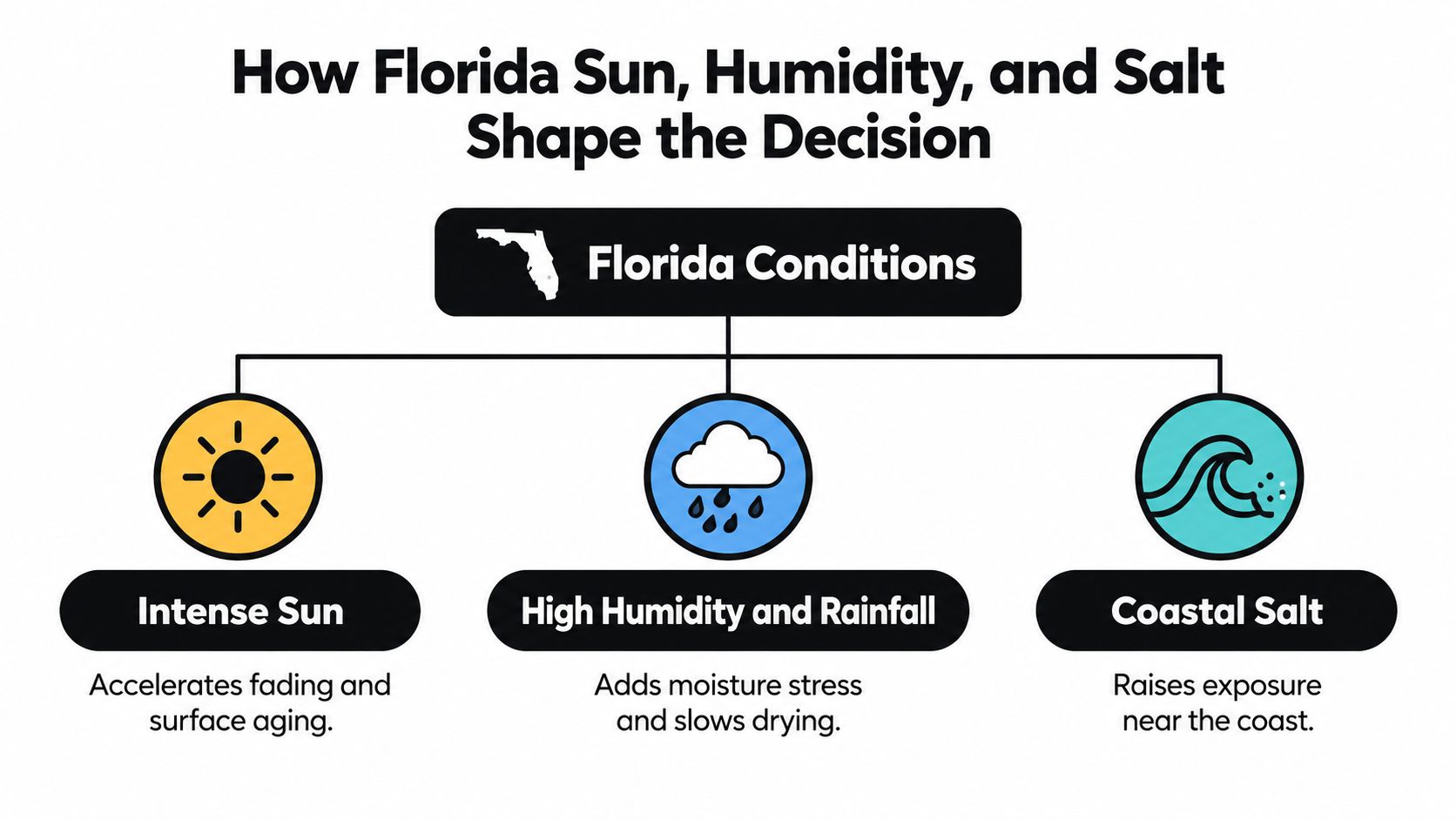
Intense sun accelerates fading and surface weathering. Give open sections that receive direct sunlight more attention than shaded boards. Wind, airborne debris, and moisture also affect how exposed wood weathers, so sun alone does not determine when a fence needs care.
High humidity and rainfall keep boards cycling through wet and dry conditions. In humid weather, wood may take longer to dry between rain events. Cedar's natural decay resistance does not prevent surface checking or remove the need to limit prolonged moisture exposure.
Coastal salt exposure adds another site-specific factor. A fence near the water may receive more salt exposure than one inland, especially in an open location. Judge the conditions at the property rather than assigning the same finish schedule to every home in a county.
Compare the fence's most exposed sections
A sheltered backyard privacy fence may weather differently from an open pool or boundary fence near the coast. Check which boards get direct sun, where rain hits, and how exposed the property is to coastal conditions. Those observations help determine whether maintaining color and applying a protective finish are worth the recurring upkeep.
Use the most exposed section as a practical reference, and compare it with a sheltered area. If the boards are weathering at different rates, that contrast can help you set a recoat calendar based on actual exposure rather than guesswork. Staining can slow visible weathering, but it cannot remove the need for regular inspection and maintenance. If sections are difficult to assess or prepare, a fence professional can help determine what work is needed before the next coat.
Timing and Surface Prep Before the First Coat
Staining immediately and waiting for months can both lead to trouble. The right time depends on whether the cedar has dried sufficiently, what condition the surface is in, and what kind of finish the homeowner plans to use. A calendar alone can't answer those questions.
Check moisture and surface condition first
Start by checking whether the boards are dry enough for the chosen product. If the wood is still too wet, a finish may not adhere or perform as intended. Product instructions matter because penetrating and film-forming finishes behave differently, and humidity or rain can affect drying and curing.
Next, inspect for excessive weathering. Leaving cedar exposed for too long before finishing isn't automatically helpful. Prolonged ultraviolet exposure can degrade the surface, leaving a weak layer that may cause later coatings to debond, crack, blister, or peel. The objective is a surface that has dried sufficiently without becoming badly weathered.
Restore the surface before applying stain
Clean the fence and remove loose, degraded material before coating. For weathered cedar, the USDA Forest Products Laboratory identifies sanding with 50–80 grit as a remedy before refinishing.USDA Forest Products Laboratory guidance on preparing weathered wood Sanding isn't a substitute for evaluating the wood, but it can help remove a weak surface layer and prepare the boards for a new finish.
Before opening a can, confirm whether the product is penetrating or film-forming, whether the fence is smooth or rough-sawn, and what drying conditions its label requires. A product suited to a rough, weathered surface may not be the right match for smooth boards, and a finish that needs dry weather shouldn't be applied just before rain.
Before the first coat, confirm:
- Dryness: The wood is ready for the specific product.
- Surface condition: The boards are clean and free of weak, weathered material.
- Preparation: Any needed sanding or surface restoration is complete.
- Finish type: The product matches the board texture and the intended appearance.
- Weather window: Conditions allow the product to dry and cure as directed.
Building a Recoat Schedule You Can Follow
A recoat date is a reminder to inspect, not an instruction to stain. In Florida, sun exposure, rain, board texture, and how well the previous coat was applied all affect how long a finish holds. Set a calendar check, then base the work on the fence's condition.
Use the first inspection as a decision point
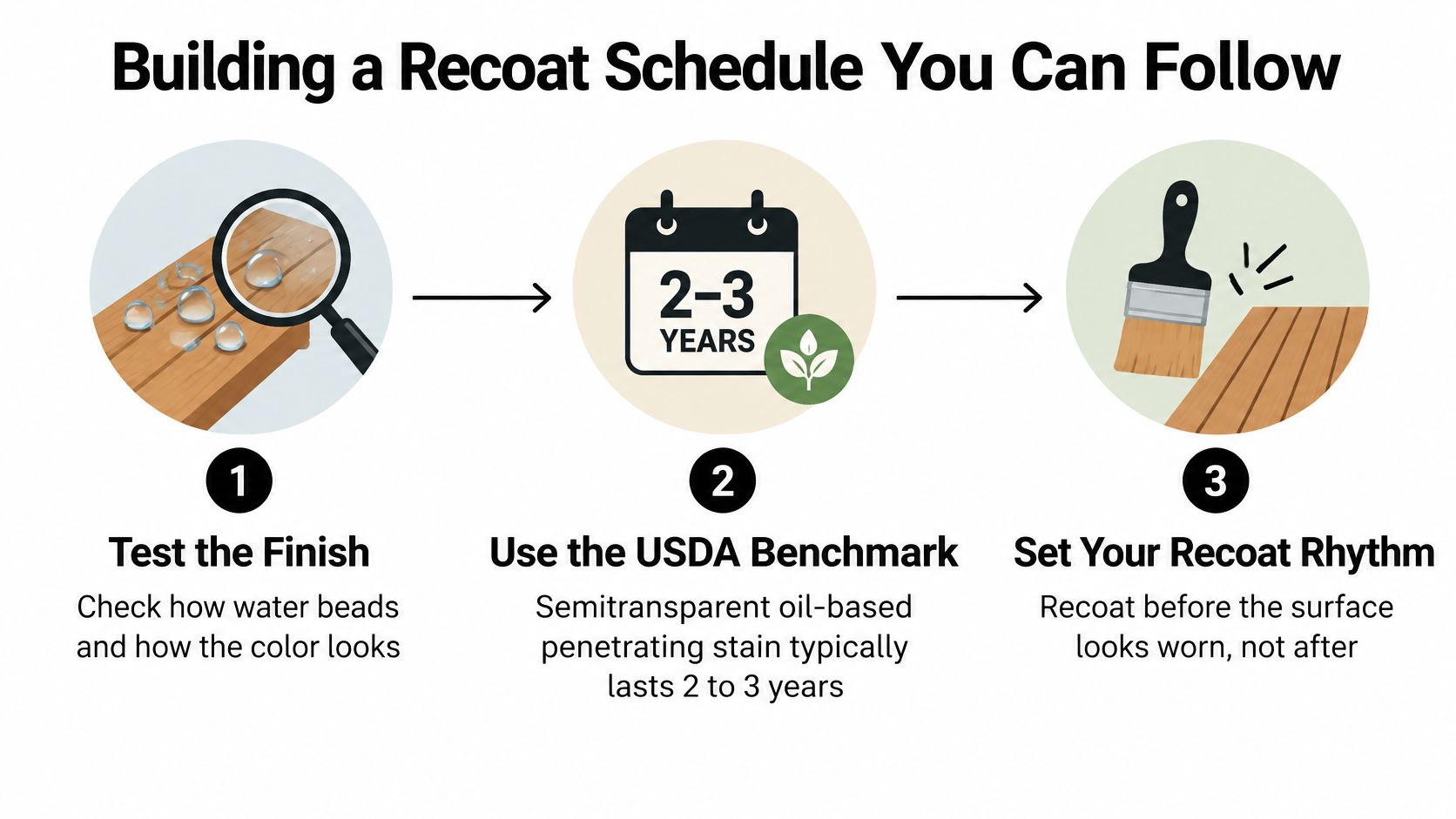
For a highly exposed Florida fence with smooth boards and a semitransparent, oil-based penetrating stain, schedule an initial inspection around the two- to three-year mark. Forest Products Laboratory testing found that the first application on smoothly planed surfaces fully exposed to weather lasted about 2 to 3 years under the tested conditions.
That range is a useful checkpoint, not a promise of service life. Compare the sun-exposed boards with shaded sections. Fading, a dry-looking surface, or visible checking can signal that the finish is wearing and deserves closer attention. If the coating and wood still look sound, keep monitoring rather than recoating automatically.
Let the surface set the pace
The same testing found that two coats on rough-sawn or weathered surfaces could last 10 years or more under its test conditions. Do not treat that result as a Florida guarantee. Exposure, orientation, rainfall, wood texture, moisture, and application quality can all change how a particular fence performs.
Keep a simple record of the finish used and when it was applied. Inspect the most exposed run at the first calendar checkpoint, then check it again when fading or checking develops. This wood fence maintenance guide can help organize routine care. If the coating is failing unevenly or you are unsure whether the surface is ready, a fence professional can assess whether it needs attention before another coat goes on. Recoating remains recurring maintenance, not a one-time fix.
Cost and Return on Investment for Stained Cedar
The cost of staining an existing fence depends on the work the surface needs, not just the amount of stain. A clean fence in good condition takes less preparation than one that needs extensive cleaning or sanding. The number of coats, product coverage, access, and how often the job must be repeated all affect the total commitment.
Labor can increase when a crew has to clean and sand before applying the finish. Sloped ground, tight access, and hard-to-reach sections can make consistent coverage more difficult. A fence with mixed sun exposure may also need closer inspection in its most exposed areas, even if the rest looks sound.
Compare recurring care with replacement
The value of staining isn't a simple guarantee that the fence will last longer. It's a choice to manage color and reduce surface exposure, while accepting the recurring expense of inspection, preparation, and recoating. Owners can weigh that ongoing cost against the expense of replacing boards or a fence that has weathered, cracked, or checked beyond repair.
AlliedFenceAndGate.com publishes a starting range of $25 to $45 per foot for new wood fence installation. That figure applies to a new installation, not the cost of staining an existing cedar fence.Published wood fencing installation cost range It can serve as a separate budget reference when an owner is comparing maintenance with replacement, but the condition and scope of the actual project determine its cost.
The most useful budget is one that accounts for the full cycle: preparation, finish, labor, and future renewal. If a homeowner wants cedar to keep its color, staining is a planned maintenance expense. If the natural gray appearance is acceptable, the owner can skip coating costs while accepting continued surface weathering.
When to Hire a Pro and Your Next Step
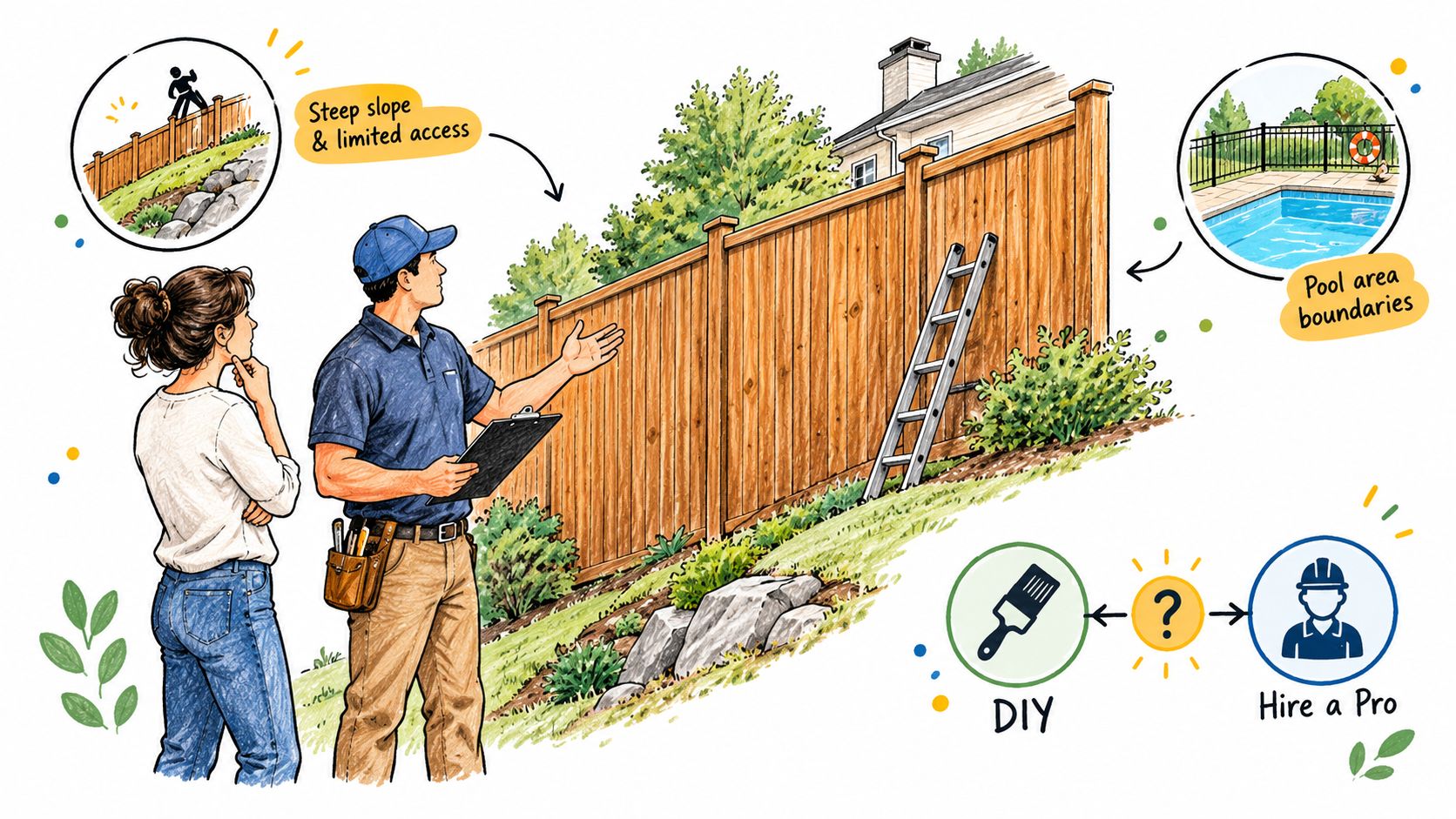
A straightforward, accessible fence in sound condition may be manageable as a DIY project. Hiring a professional becomes the better call when the work requires more than applying stain evenly. Tall or sloped runs, a large perimeter, difficult access, or deterioration that needs repair first can make preparation and coverage harder to control.
Pool and HOA properties need additional care. The owner may need to confirm applicable rules and project requirements before starting, particularly where the fence forms part of a pool enclosure or a regulated property layout. A contractor can assess the site, identify work that belongs in a larger fence project, and coordinate permitting or inspections when the project requires them.
Get help when the job includes more than finish
A professional assessment is useful when boards need repair before coating or when the owner can't tell whether the existing surface is ready for a new finish. Consistent preparation matters, and a rushed application over a weak or unsuitable surface can waste both labor and product. For a fence that also needs replacement or other site work, a contractor can assess the broader project rather than treating staining as the only decision.
A digital estimator can help establish a ballpark scope before the owner commits. AlliedFenceAndGate.com offers a Digital Fence Estimator for instant ballpark pricing and detailed PDF quotes, giving homeowners a way to scope fence work before deciding how to proceed.
This week, measure the fence, note which runs receive the most sun and whether the property is near the coast, then request an estimate if access, repairs, or consistent application make the job difficult to handle independently.
#MartinCountyFencing #PalmBeachCountyFencing #TreasureCoastFencing #FloridaFenceContractor #CedarFence #CedarFencing #WoodFence #WoodFenceStaining #FenceStaining #FenceMaintenance #FenceRepair #PrivacyFence
AlliedFenceAndGate.com™ provides a Digital Fence Estimator for instant ballpark pricing and detailed PDF quotes, which can help homeowners scope a cedar fence project alongside its staining and maintenance needs. Measure the fence and note its sun and coastal exposure, then visit AlliedFenceAndGate.com™ to request an estimate.
Related Fencing Services
Need a fence or gate on the Treasure Coast?
Licensed, insured, and bonded. Free estimates across Martin, St. Lucie, Indian River & Palm Beach counties.
Call (772) 530-3127